Fulfillment Insights for
Supplement, Beauty & Wellness Brands
Operational Strategies and 3PL Expertise for Modern Health and Wellness Brands Scaling DTC, Retail, and Wholesale Operations
Key Takeaways
- Prep must be complete before inventory reaches FBA. Sellers are responsible for unit packaging, barcode labeling, and accurate shipment information.
- A UPC does not automatically replace an FNSKU. Eligible Brand Registry representatives can use manufacturer barcodes; resellers must apply FNSKU labels.
- Packaging depends on the supplement format. Powders, liquids, glass bottles, and bundles need different protection. Gummies also follow seasonal shipping restrictions.
- Shelf life and date accuracy both matter. Supplements need enough time for full consumption plus 90 days at check-in. Printed dates must match Send to Amazon, with one expiration date per ASIN per box.
- Carton compliance is part of shipment prep. Meet Amazon’s size and weight limits, apply a unique box ID label to every carton, and report its contents accurately. Or simply outsource this to a partner, like NDN Fulfillment
Amazon FBA prep requirements used to come with a fallback. Since January 1, 2026, they don’t. Amazon’s Selling Partner API changelog confirmed the end of prep and item labeling services in the US store, including for inventory routed through AWD, Amazon Global Logistics, Amazon SEND, and the Supply Chain Portal.
For a supplement brand moving from DTC to Amazon, that means two tracks. Listing approval gets the product live. Prep gets the inventory received.
How to Sign Up for FBA Before the First Shipment
Signing up takes minutes. Meeting the Amazon FBA requirements behind it takes longer.
Amazon’s FBA beginner’s guide sets out four steps:
- Account. Open a selling account at sell.amazon.com, on the Professional plan Amazon recommends.
- Registration. Register for FBA in Seller Central, under Settings, then Account Info.
- Offers. Choose “Amazon will ship and provide customer service” for each listing.
- Shipment. Build it in Send to Amazon, where units, cartons, and expiration dates are entered.
Important note: Amazon’s dietary supplements policy requires manufacture in a facility compliant with 21 CFR 111 or 21 CFR 117, verified by an accredited third-party cGMP audit or certification. First-party audits and FDA inspections don’t qualify.
Barcode and Amazon Package Label Rules
Every unit needs one scannable barcode. Which one depends on who’s sending it.
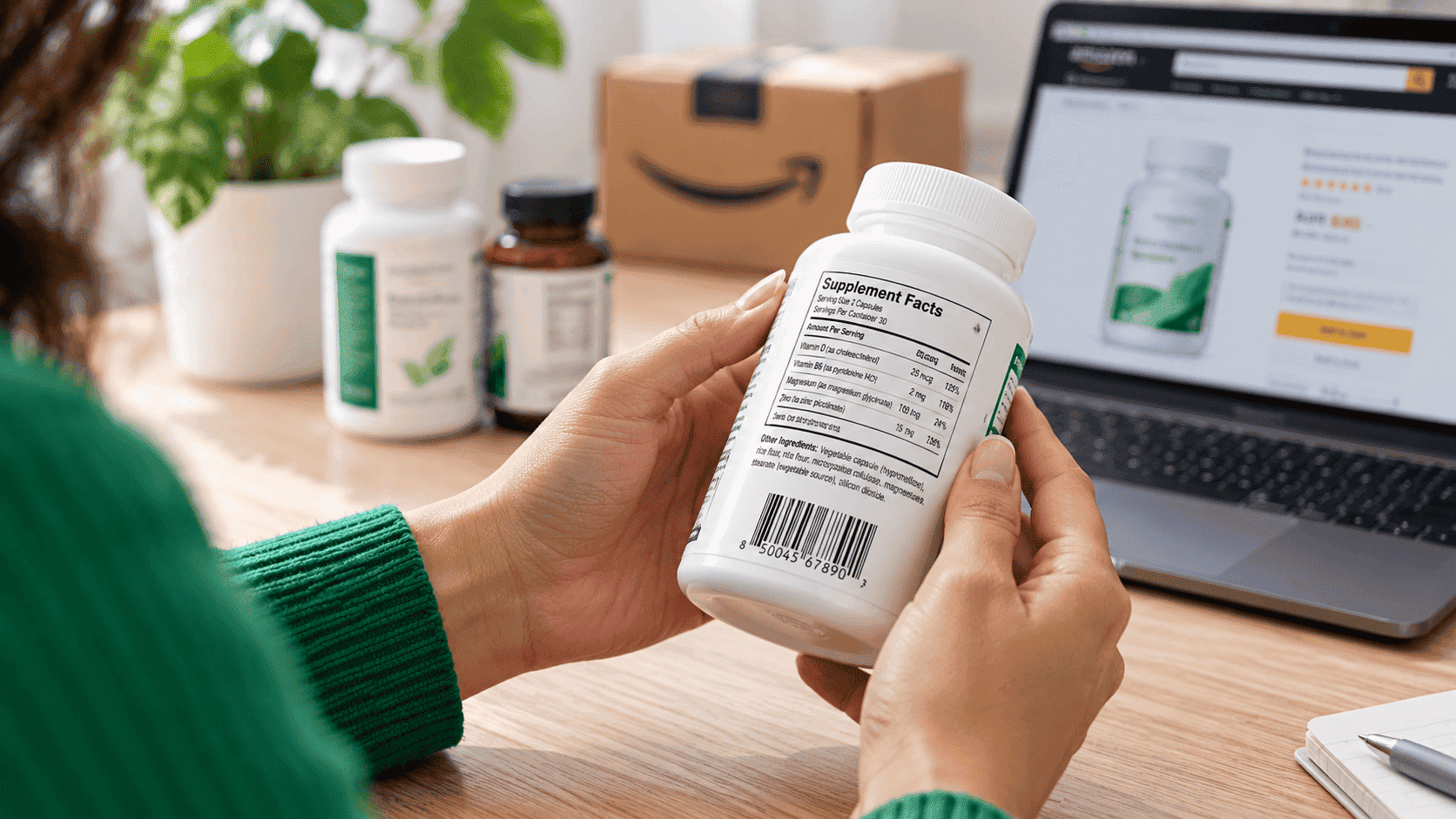
Since March 31, 2026, only brand owners can skip FNSKU stickers. A manufacturer UPC qualifies when the product is new, has one scannable barcode matched to one ASIN, and is registered to a brand the seller represents in Brand Registry. Brands still without a UPC can get one through GS1 US.
Every other unit needs an FNSKU, and each Amazon package label must meet Amazon’s barcode label rules:
- Black ink on white, non-reflective labels with removable adhesive, 1 x 2 to 2 x 3 inches
- Thermal or laser printing at 300 DPI or higher, never inkjet
- Scannable for 24 months, 0.25 inches from the packaging edge, off curves and corners
- All other visible barcodes covered
Units missing a required FNSKU are marked defective, stickered by Amazon, and logged on the Inbound Performance Dashboard. At 300 units, a missed label is an exception. At 30,000, it’s a defect rate.
How to Pack Items for Amazon FBA by Supplement Format
Prep isn’t set by the category. It’s set by the container.
That’s how to pack items for Amazon FBA when a catalog spans capsules, powders, liquids, and gummies. Core FBA packaging rules by format:
| Format | Prep requirement |
|---|---|
| Capsules and tablets | One sealed, secure package with a scannable barcode |
| Powder tubs and pouches | Must pass a one-minute shake test and five 3-foot drops, or be poly-bagged with a suffocation warning |
| Liquid drops and shots | No extra prep at 4.2 oz (125 mL) or less; larger units without a double seal may need a cap seal or poly bag |
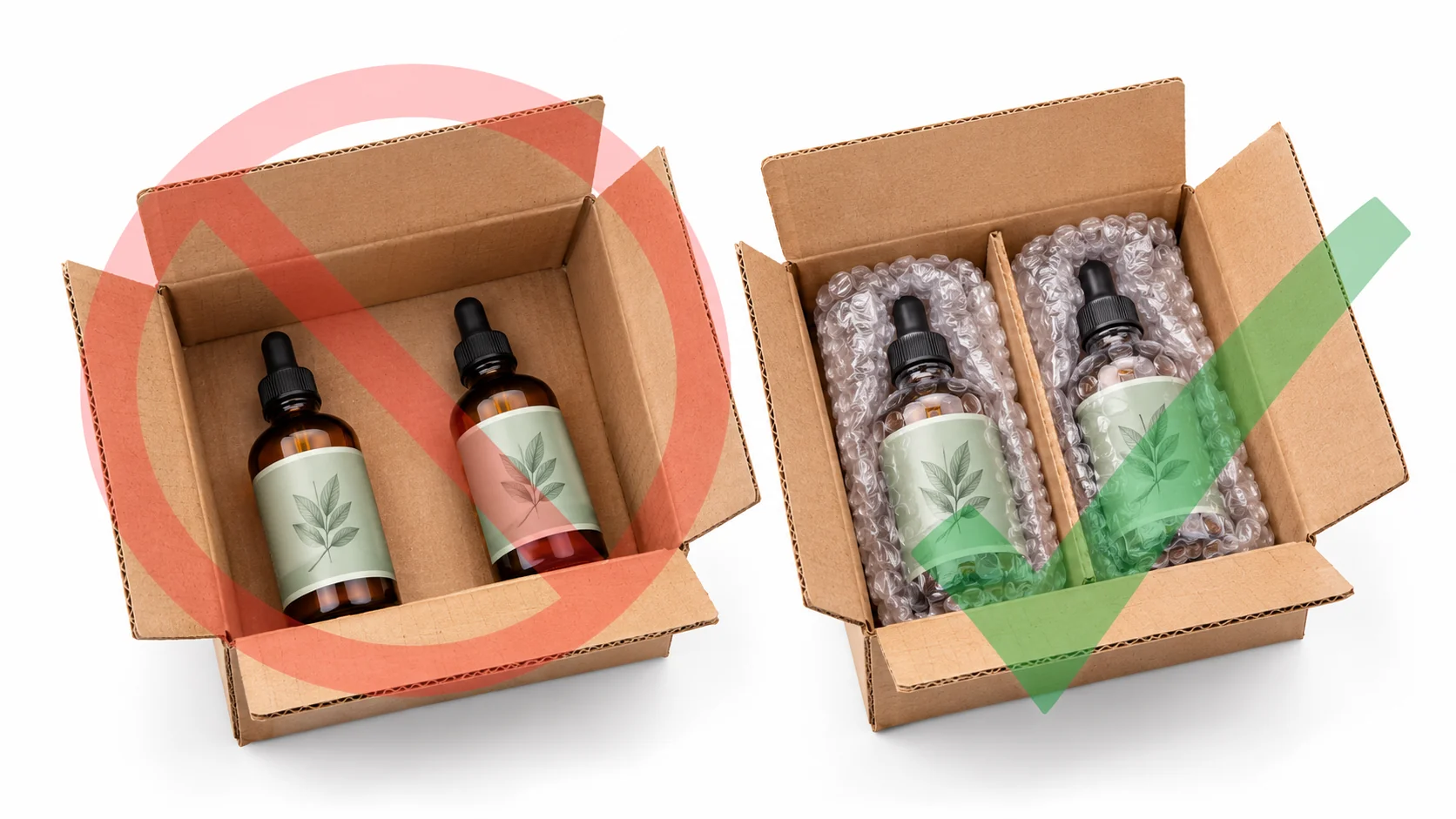
| Glass bottles | Bubble wrap, plus a cap seal if leaks remain possible |
| Bundles and multi-packs | "Sold as set" label, a unique set ASIN, and inner barcodes covered |
Multi-packs built through kitting and assembly need the set label applied before cartons close.
Gummies are subject to seasonal shipping restrictions under Amazon’s meltable inventory policy. For the 2026-2027 season, sellers have started sending pectin and coated gummies to FBA since August 31, 2026, and gelatin gummies since September 21, 2026. Amazon may dispose of meltable inventory still in its fulfillment centers after April 15, 2027.
Expiration Date Rules for Supplements
Amazon’s expiration date requirements treat dietary supplements as expiration-dated, even with no printed date.
At check-in, a supplement needs enough shelf life to be consumed in full, plus 90 days. A 90-count bottle taken once daily needs 180 days. Amazon’s guideline table also lists 730 days for herbal or mineral supplements.
The labeling rules:
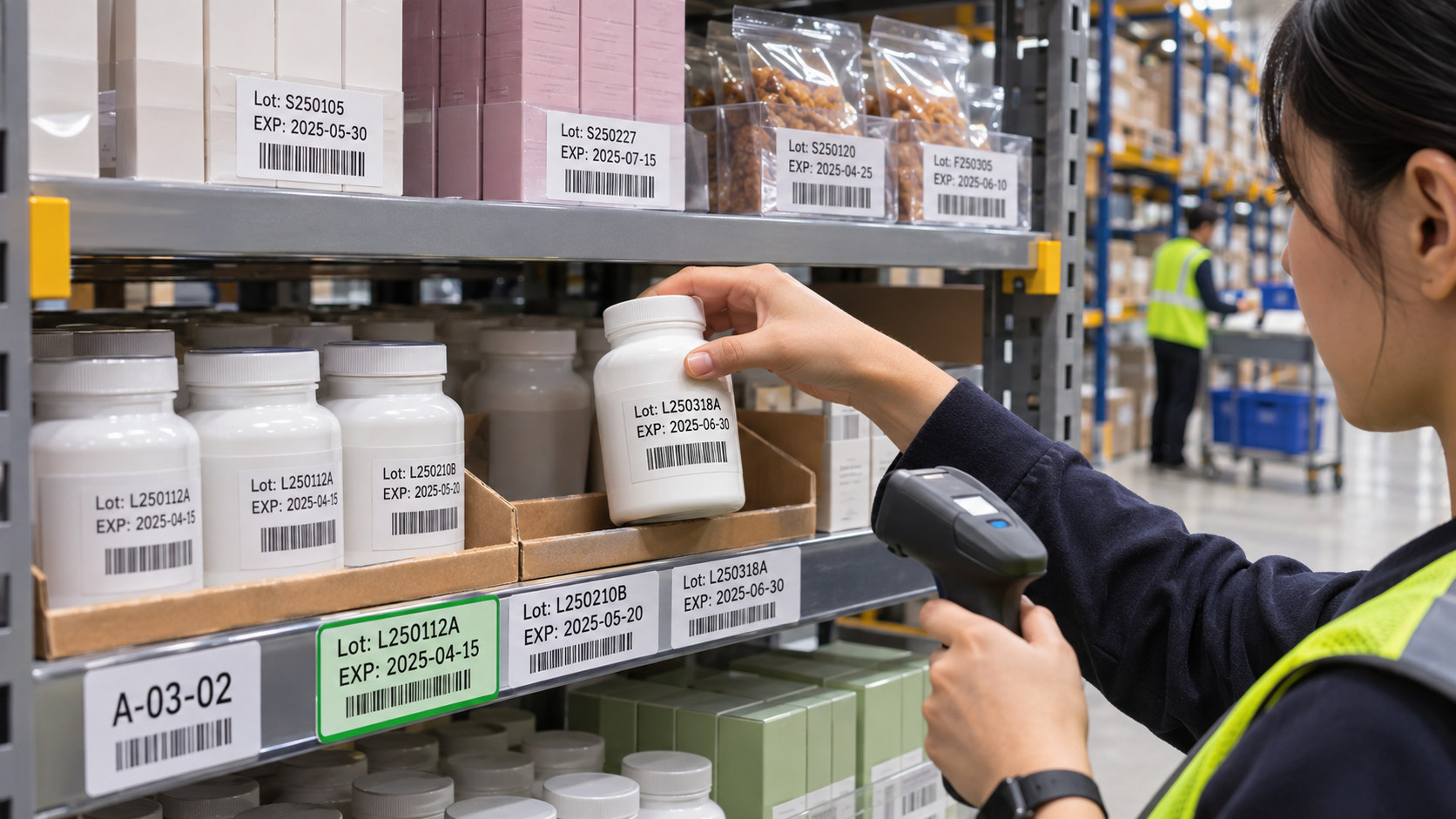
- Dates on every unit and the outer box, 36-point or larger on the box
- Lot numbers alone are insufficient
- Bagged units carry the date outside the bag
- One expiration date per ASIN per box
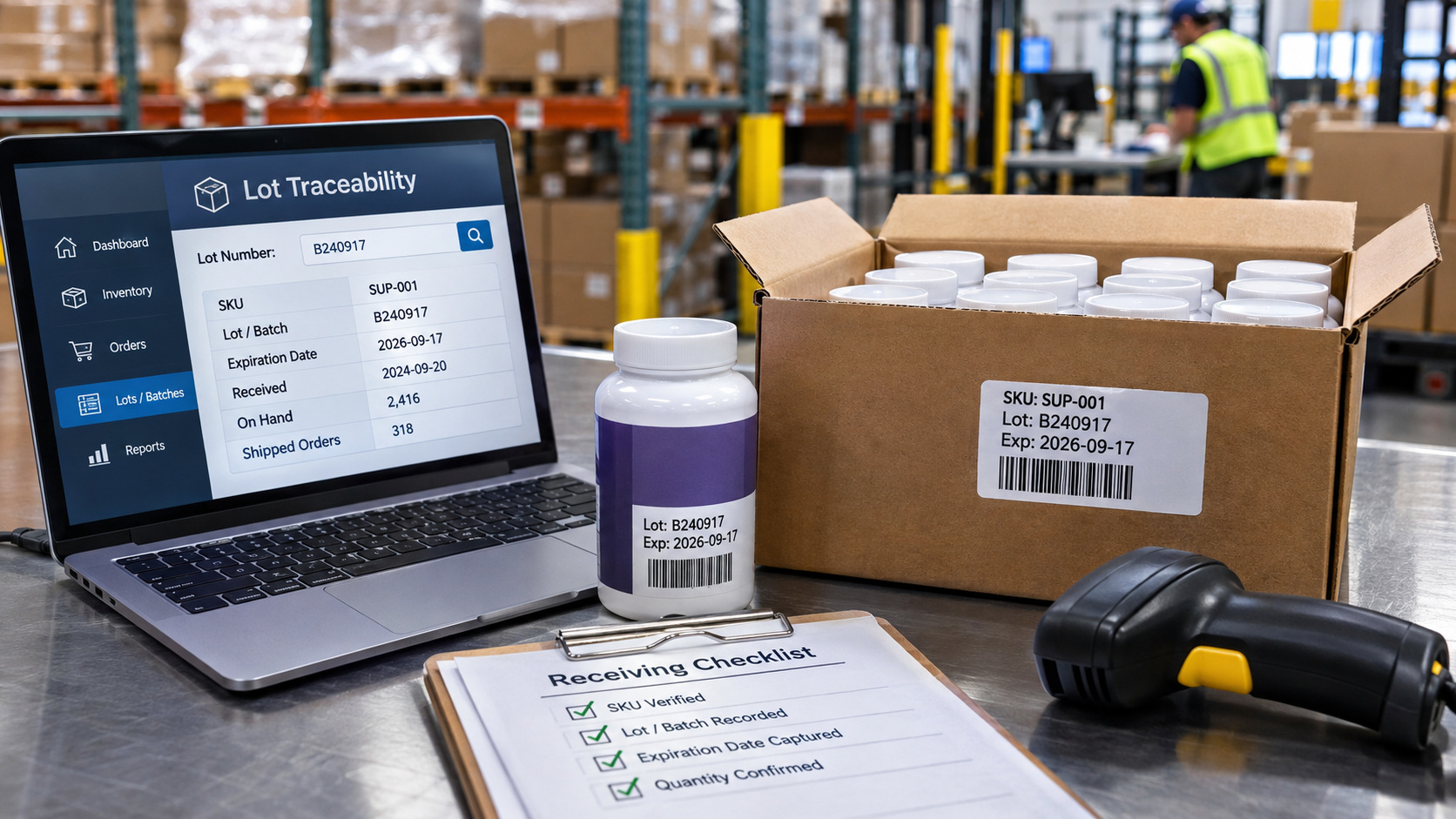
The date entered in Send to Amazon must match the printed date. For MM-YYYY, Amazon uses the first day of the month. A mismatch is an expiration date defect and can mean listing blocks, disposal, or account deactivation.
Important note: Lot control sets which dates ship. Sending a specific lot to FBA is a prep decision, and it sits at the center of nutraceutical fulfillment.
Amazon Shipping Requirements for FBA Cartons
These Amazon shipping requirements apply to small parcel and pallet shipments alike. Amazon’s shipping and routing requirements call for:
- Rigid, six-sided boxes with flaps intact, up to 36 x 25 x 25 inches
- 50 pounds maximum, unless the box holds a single oversize item
- 2 inches of cushioning per item, except in manufacturer case packs
- Bubble wrap, full paper sheets, air pillows, or polyethylene foam, never packing peanuts or shredded paper
- A unique FBA box ID label on every box, and four labels per pallet
Inaccurate box content information can block future shipments and add a manual processing fee.
Send Amazon Inventory Prepped, Labeled, and Correctly Dated
Since January 2026, supplement inventory has to reach FBA prepped, labeled, and correctly dated.
NDN Fulfillment provides FBA prep services from a cGMP-aligned handling nd FDA-registered facility in Oklahoma City, covering FNSKU labeling, kitting, inserts, and carton forwarding to Amazon. DTC fulfillment runs from the same facility and inventory.
Questions to Ask a Prep Partner
For many brands, the right time to outsource comes when prep takes more hours than growth. Add these to the checks in how to choose a 3PL:
- How is the Send to Amazon date checked against the printed date?
- How are cartons built to hold one expiration date per ASIN?
- Which tests run on powder and liquid SKUs before they ship?
- How are gummy SKUs scheduled around the meltable window?
Use our Fulfillment Cost Calculator to review your current setup, or request a quote
Amazon FBA Prep Requirements FAQs
What are the requirements for Amazon FBA in 2026-2027?
Inventory must arrive prepped and labeled by the seller, with a scannable barcode on every unit, packaging suited to its format, accurate expiration dates where they apply, and cartons that meet Amazon’s size, weight, and box ID label rules.
Does Amazon still offer prep services in the US?
No. Since January 1, 2026, Amazon no longer provides prep or item labeling for US FBA shipments, including inventory moving through AWD, Amazon Global Logistics, Amazon SEND, and the Supply Chain Portal. Sellers prep in-house or use a partner.
Do supplement bottles need FNSKU labels?
It depends on the seller. Brand representatives in Brand Registry can use an eligible manufacturer UPC without stickers. Since March 31, 2026, resellers must apply an FNSKU to every unit, even when the bottle already carries a UPC.
How much shelf life does a powder supplement need at check-in?
Enough to be consumed, plus 90 days. A 30-serving tub taken once daily needs at least 120 days remaining when it reaches Amazon. Amazon’s guideline table also lists 730 days for herbal or mineral supplements.
Get Started
Use our Fulfillment Fees Calculator to evaluate your current fulfillment structure and identify operational gaps that may impact retail and wholesale growth.
If you’re evaluating B2B fulfillment partners, request a quote to see how your operation can be structured to support retailer compliance, inventory visibility, and scalable fulfillment execution.
Recent Posts