Fulfillment Insights for
Supplement, Beauty & Wellness Brands
Operational Strategies and 3PL Expertise for Modern Health and Wellness Brands Scaling DTC, Retail, and Wholesale Operations
Key Takeaways
- Compliance-grade fulfillment includes lot tracking, expiration control, and traceability.
- Every item carries a lot number and best-by date before it can be sold, so any order traces back if a recall happens.
- Related terms: FEFO/FIFO rotation, quarantine holds, kitting, subscription batches, and Amazon FBA prep.
- FDA covers storage, too. cGMP under 21 CFR Part 111 applies to handling, not just manufacturing.
- Use cases are: DTC subscriptions, Amazon FBA, and multi-location B2B distribution for clinics and franchises.
Nutraceutical fulfillment is the storage, handling, and shipping of supplements and nutrition products under strict lot, expiration, and compliance controls. From the outside, it looks like ordinary ecommerce fulfillment. It is not.
Roughly 75% of Americans now take dietary supplements. That demand sits on top of a global supplements market worth around $209 billion in 2025 and projected to reach $431 billion by 2033. Higher volume creates opportunity. It also increases regulatory exposure.
A capsule and a phone case can move through the same warehouse. Only one of them can trigger a recall.
That single difference is what separates supplement logistics from general order fulfillment. This guide covers what nutraceutical fulfillment means, how it works inside the warehouse, and where it shows up in real operations.
What Is Nutraceutical Fulfillment?
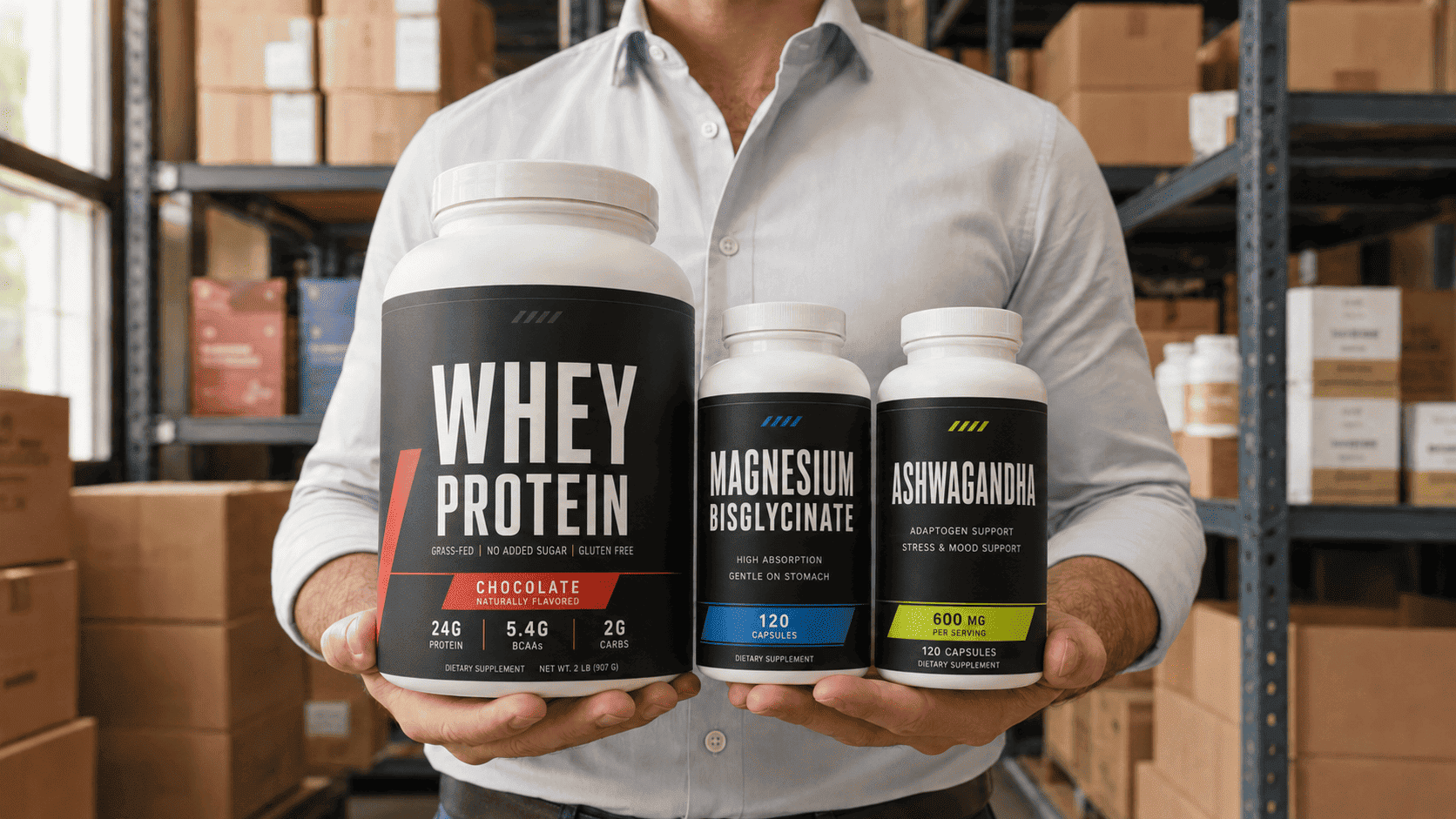
Nutraceuticals are food-derived products marketed for health & wellness benefits beyond basic nutrition. They usually are vitamins, protein powders, amino acids, minerals, probiotics, gummies, softgels, and more. Nutraceutical fulfillment is the operation that stores those products and gets them to the customer without breaking the chain of accountability that regulators, retailers, and buyers expect.
Standard fulfillment asks one question: Did the right item ship on time?
Nutraceutical order fulfillment asks three more:
- Which lot shipped?
- How much shelf life was left?
- And can that be proven six months later?
The defining feature is traceability. Every shipment can be tied back to a specific production lot and expiration date, on demand.
What Makes Nutraceutical Fulfillment Different From Standard Ecommerce
The gap between nutrition ecommerce fulfillment and general fulfillment is not the picking or the packing. It is everything that happens before a unit is allowed to ship.
Inbound product is not simply “received and available.” It is received, logged against a lot number and best-by date, and often held until documentation clears. Only then does it become sellable stock.
From there, rotation follows FEFO (first expired, first out) so the oldest usable stock leaves first and short-dated inventory never reaches a subscriber. Damaged or returned units go to quarantine, not back onto the shelf.
The regulatory layer sits underneath all of it. In the United States, facilities that store and handle supplements operate under current good manufacturing practice rules in 21 CFR Part 111, and many hold FDA Registered status.
At lower volume, a founder can track lots in a spreadsheet. At scale, that spreadsheet becomes the single point of failure; one reason scaling a 3PL gets more complex than most brands expect.
“Traceability is where supplement fulfillment either holds or breaks. Everything else is just moving boxes.” — Logan Anderson, Director of Supply Chain Operations, NDN Fulfillment
Nutraceutical Fulfillment vs. Ecommerce Fulfillment
| Requirement | General Ecommerce | Nutraceutical |
|---|---|---|
| Inventory tracking | By SKU | By SKU, lot, and best-by date |
| Rotation rule | FIFO or none | FEFO |
| Returns handling | Restock | Quarantine and inspect |
| Facility standard | General warehouse | FDA Registered, cGMP-compliant |
| Recall readiness | Rarely required | Traceable to the lot |
Inside a Nutrition Fulfillment Warehouse
A nutrition fulfillment warehouse runs the same core stages as any 3PL, tightened at every step for a regulated, consumable product.
Nutraceutical Receiving & Fulfillment
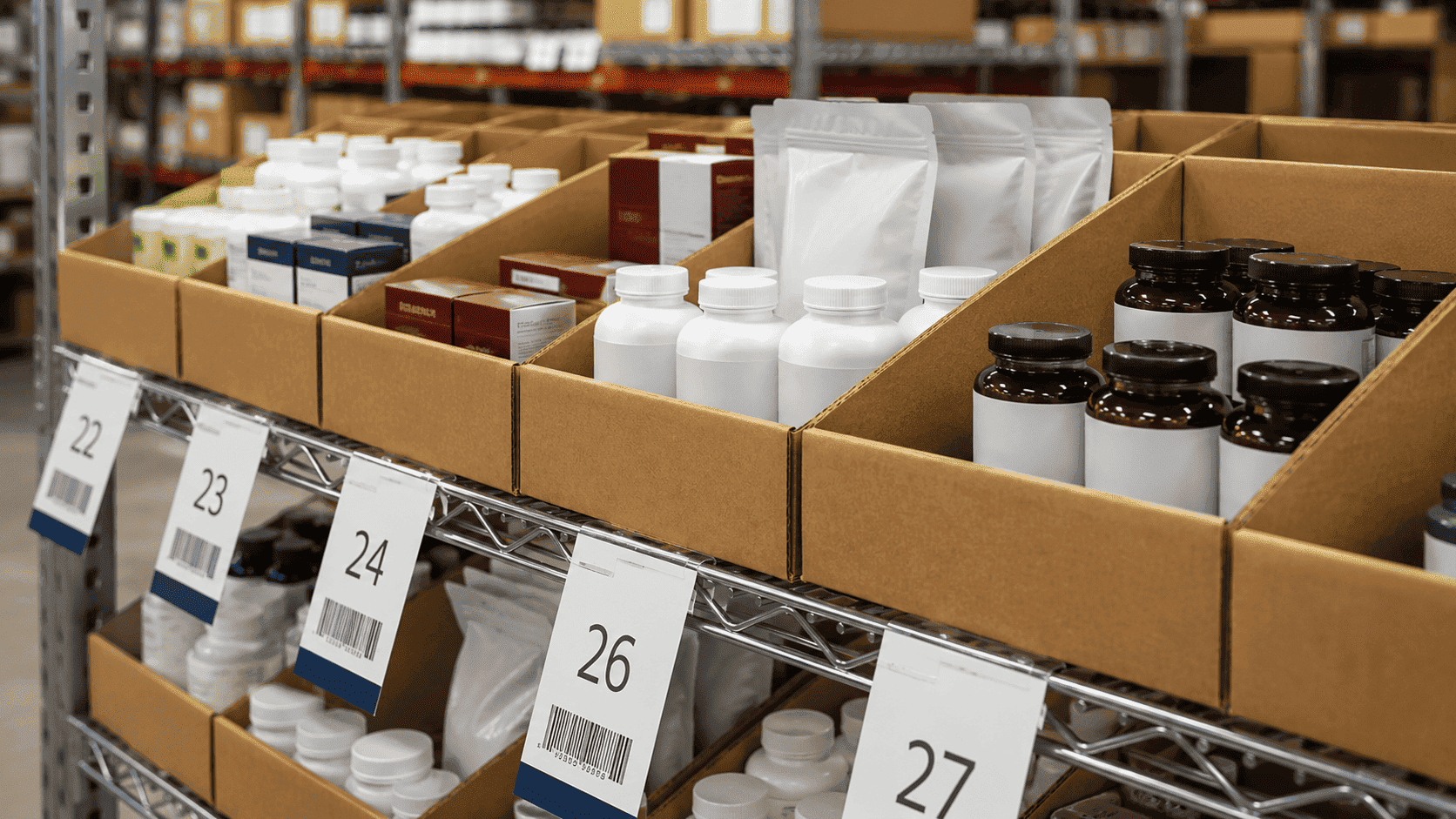
Receiving captures lot numbers, best-by dates, and quantities. It flags anything with too little shelf life left. Storage separates categories and controls conditions, so gummies, powders, and probiotics are not handled identically. Picking follows expiration logic, not just bin location. Packing verifies the unit with a scan before the carton closes.
Nutraceutical Value-Added Services
Around that spine sit the value-added services supplement brands actually ask for: kitting and subscription bundles, inserts and box mapping, QA inspection on inbound goods, carton forwarding to retailers, and Amazon FBA prep with FNSKU stickering across the platforms a brand already sells on.
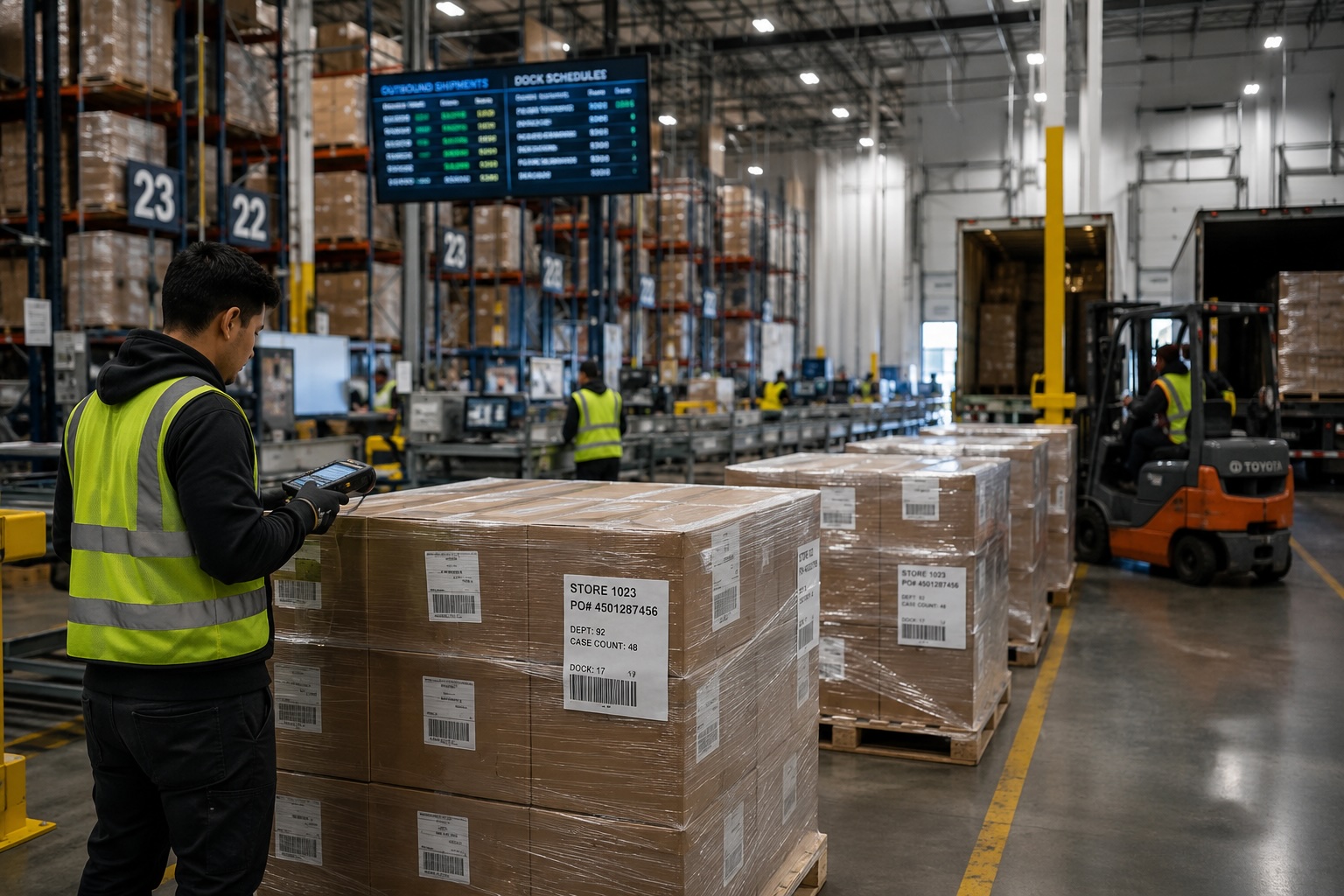
Nutrition fulfillment at this level is less about square footage than about discipline. A retailer shipment, for example, may require specific pallet configurations, labeling standards, routing-guide compliance, ASN submission, and appointment scheduling, all handled before the truck is booked.
Examples & Use Cases of Nutraceutical Fulfillment
The clearest way to understand it is to see where it operates.
- DTC subscriptions. A startup supplement brand shipping 800 monthly capsule orders needs reorders to land before the customer runs out, and needs every bottle to carry adequate remaining shelf life. FEFO rotation and reliable next-business-day dispatch keep churn down.
- Amazon and marketplaces. Carton forwarding, FNSKU stickering, and prep-to-spec let a brand route inventory into FBA without touching it twice. In-house or outsourced stickering typically runs about half of Amazon’s per-unit fee.
- Wholesale and retail. Case packing, master-case requirements, and routing-guide compliance turn a DTC brand into a retail-ready supplier without chargebacks.
Note: A brand shipping from a central US hub like Oklahoma City can reach the majority of DTC customers within two business days, with no inter-warehouse inventory movement to reconcile.
Questions Worth Asking a Nutraceutical Fulfillment Provider
Before signing with any 3PL, take these into a vendor call:
- How is lot and best-by data captured at receiving?
- Is the facility FDA-registered and cGMP-compliant, and when was it last inspected?
- What is the standard order cutoff and SLA for next-business-day shipping?
- How are returns and damaged units handled?
- Which value-added services run in-house versus outsourced (kitting, FBA prep, carton forwarding)?
If a provider cannot answer the first question quickly, the rest rarely holds up. For a fuller framework, see how to choose a 3PL for a scaling CPG brand.
Turn Lot Control and Speed Into One Accountable System
Supplement brands rarely outgrow fulfillment because volume rises. They outgrow it because traceability, compliance, and speed stop fitting inside the same system.
NDN Fulfillment runs dietary supplement fulfillment from a single FDA-registered, cGMP-compliant facility, offering lot control, next-business-day dispatch, and value-added services under one roof.
See where the numbers land, then decide.
CTA: Request a Quote, or run your volume through the fulfillment cost estimator.
Nutraceutical Fulfillment FAQs
What is nutraceutical fulfillment in simple terms?
It is the storage, pick-and-pack, and shipping of supplements under lot and expiration controls. Every unit is tracked by batch and best-by date, so orders stay compliant and can be traced back quickly if a product recall is ever needed.
How is a nutrition fulfillment warehouse different from a regular one?
A nutrition fulfillment warehouse tracks inventory by lot and expiration, enforces FEFO rotation, quarantines returns, and operates under FDA cGMP rules.
Does the FDA regulate nutraceutical order fulfillment?
Yes. Facilities that hold and handle supplements fall under 21 CFR Part 111 good manufacturing practice rules and register with the FDA, which inspects those sites even though it does not pre-approve the supplement products themselves.
What is an example of nutraceutical order fulfillment?
A collagen-powder brand launching on TikTok Shop ships 1,500 units a month. The 3PL bundles two flavors into a kit, rotates stock by best-by date, and packs each order according to brand and product integrity rules.
Can a nutraceutical fulfillment partner prepare Amazon FBA shipments?
Yes. Most handle FNSKU stickering, poly-bagging, carton forwarding, and prep-to-spec so inventory routes straight into FBA, and often at roughly half of Amazon’s per-unit stickering fee, a meaningful saving at higher volume.
Get Started
Use our Fulfillment Fees Calculator to evaluate your current fulfillment structure and identify operational gaps that may impact retail and wholesale growth.
If you’re evaluating B2B fulfillment partners, request a quote to see how your operation can be structured to support retailer compliance, inventory visibility, and scalable fulfillment execution.
Recent Posts