Fulfillment Insights for
Supplement, Beauty & Wellness Brands
Operational Strategies and 3PL Expertise for Modern Health and Wellness Brands Scaling DTC, Retail, and Wholesale Operations
Key Takeaways
- Positioning comes before the product. A narrow, well-defined buyer beats a “supplements for everyone” catalog every time.
- A supplement business plan is a financial model, not a document. Its job is to prove the margins work before you commit capital.
- The category is profitable, but not automatically. Gross margins of 70-80% are normal; hidden costs and weak repurchase rates erode them.
- Minimum order quantities shape your risk. While 300-500 units can be useful for early validation, a commercially viable first run often lands closer to 5,000 units per SKU.
- Fulfillment is the chapter founders skip. Once product and orders exist, how you pick, pack, and ship decides whether growth is profitable or painful.
Most founders learning how to start a supplement company get the order of operations backward. They pick a product first, then a manufacturer, then worry about selling. The brands that survive their first year do the opposite: they define who they serve, model the unit economics, and plan how orders will actually ship before they start a supplement business at all.
This guide stays on the business side of this endeavor: positioning, margins, minimum order quantities, and what happens after the product lands in a warehouse.
So, here is how you start a supplement company that will still be around in three years: You plan. And then you execute with clear expectations. Let’s see how it’s done.
Start Your Supplement Business Plan With Positioning, Not Product
The supplement aisle is crowded, and generic rarely wins. Before you start a supplement brand, decide who it is for and what outcome it delivers.
A narrow focus is not a limitation. It is an operational advantage. “Clean pre-workout for HYROX competitors” is a business. “Vitamins for everyone” is a commodity fighting on price.
Differentiation has to be real. Bioavailable ingredient forms, third-party tested batches, or a formula built for a specific population all justify a higher price. A SKU that a hundred other stores also sell does not.
Note: Lock the brand name early. Run a trademark search through the USPTO before you print labels, because rebranding after launch is expensive and avoidable.
Write a Supplement Business Plan That Survives Contact With Reality
A supplement business plan is not a formality for investors. It is the model that tells you whether the numbers work before you spend money finding out.
Keep it lean and honest. The SBA’s business plan framework covers the structure, but for supplements the financial sections carry the weight.
Your plan should answer four questions:
- What does one unit cost to make and deliver? Cost of goods, plus packaging, plus the pick-and-pack and shipping to get it to the customer.
- What will customers pay, and why? Price has to clear a healthy margin over landed cost, and the “why” is your positioning.
- How often do they reorder? A bottle of 60 to 120 capsules is roughly a one-month supply, so subscription economics depend on that cadence.
- What does it cost to acquire them? If acquisition cost outruns the first order’s margin, the brand only survives on repeat purchases.
The plan’s real output is a single number: contribution margin per order. If that number is negative, no amount of marketing fixes it.
What is contribution margin per order?
Contribution margin per order is the profit a single order contributes before fixed costs. Take the order’s revenue, subtract every variable cost: product, pick-pack, shipping, payment processing. What’s left covers overhead, then profit. It isn’t gross margin. It’s the number that tells you whether each order pays its way and leaves room for profit.
Is a Supplement Business Profitable?
Short answer: yes, but the category rewards discipline, not enthusiasm. Gross margins in the 70-80% range are common when cost of goods is marked up four to five times, which is standard gross margin math for the category.
The demand is real. According to Grand View Research, the global dietary supplements market is projected to reach roughly $431.69 billion by 2033, growing at about 9.5% from 2026 to 2033.
Where the Margin Actually Goes
Gross margin is not profit. Three things quietly eat it:
- Hidden operating costs. Payment processing, shipping supplies, returns, and storage rarely make it into the first spreadsheet.
- Underfunded acquisition. Paid channels get more expensive as you scale, and thin margins leave no room to bid.
- Weak repeat purchase rates. A one-time buyer is often sold at a loss; the profit is in the reorder.
Here is a simplified single-unit view for a $40 bottle:
| Line Item | Per Unit | Notes |
|---|---|---|
| Retail Price | $40.00 | DTC list price |
| Cost of Goods | $8.00 | 4-5x markup target |
| Pick, Pack & Shipping | $7.00 | Fulfillment + Carrier |
| Payment Processing | $1.40 | ~3.5% of order |
| Marketing (Average CAC) | $12.00 | Varies widely |
| Contribution Margin | $11.60 | Before overhead |
The table is illustrative, not a promise. But it shows why the reorder matters. That first sale is thin. The second one, with no acquisition cost attached, is where a supplement business becomes profitable.
What It Actually Takes to Launch a Supplement Business
The short version: you supply a formula, a contract manufacturer turns it into a producible recipe, and an FDA-registered, cGMP-compliant facility makes it under your brand.
The regulatory guardrails are non-negotiable. The FDA governs labeling and manufacturing standards, and the FTC polices your claims. Structure or function language (“supports immune health”) is allowed; disease claims (“cures,” “treats,” “prevents”) are not.
Minimum order quantities play a major role in shaping your risk. Runs of 300-500 units can be valuable for testing demand, while first production runs closer to 5,000 units per SKU generally offer stronger commercial economics. A 2,500-unit run can provide a practical middle ground, depending on your supplier, pricing, and growth plan.
How To Start A Supplement Line
Turn your formula into a producible recipe with an FDA-registered, cGMP contract manufacturer. Source ingredients, blend, test, label, and package. Then set up fulfillment to ship what the line produces.
Note: The formula-to-finished-product process is its own discipline. For the depth this deserves, see how supplement manufacturing and launch economics work on the production side.
After Manufacturing: How Selling and Shipping Actually Work
Here is the chapter most founders skip. You now have product on a shelf and orders coming in. Everything before this was preparation. This is the part that runs every day.
Fulfillment is not a detail. At low volume, a founder packing boxes in a spare room looks fine. At scale, that fragility gets exposed.
“A supplement brand's fulfillment problem doesn't show up at 200 orders a month. It shows up at 2,000, when the workarounds stop scaling.” — Steven Anderson, CEO, NDN Fulfillment
Mechanics that matter for a regulated category
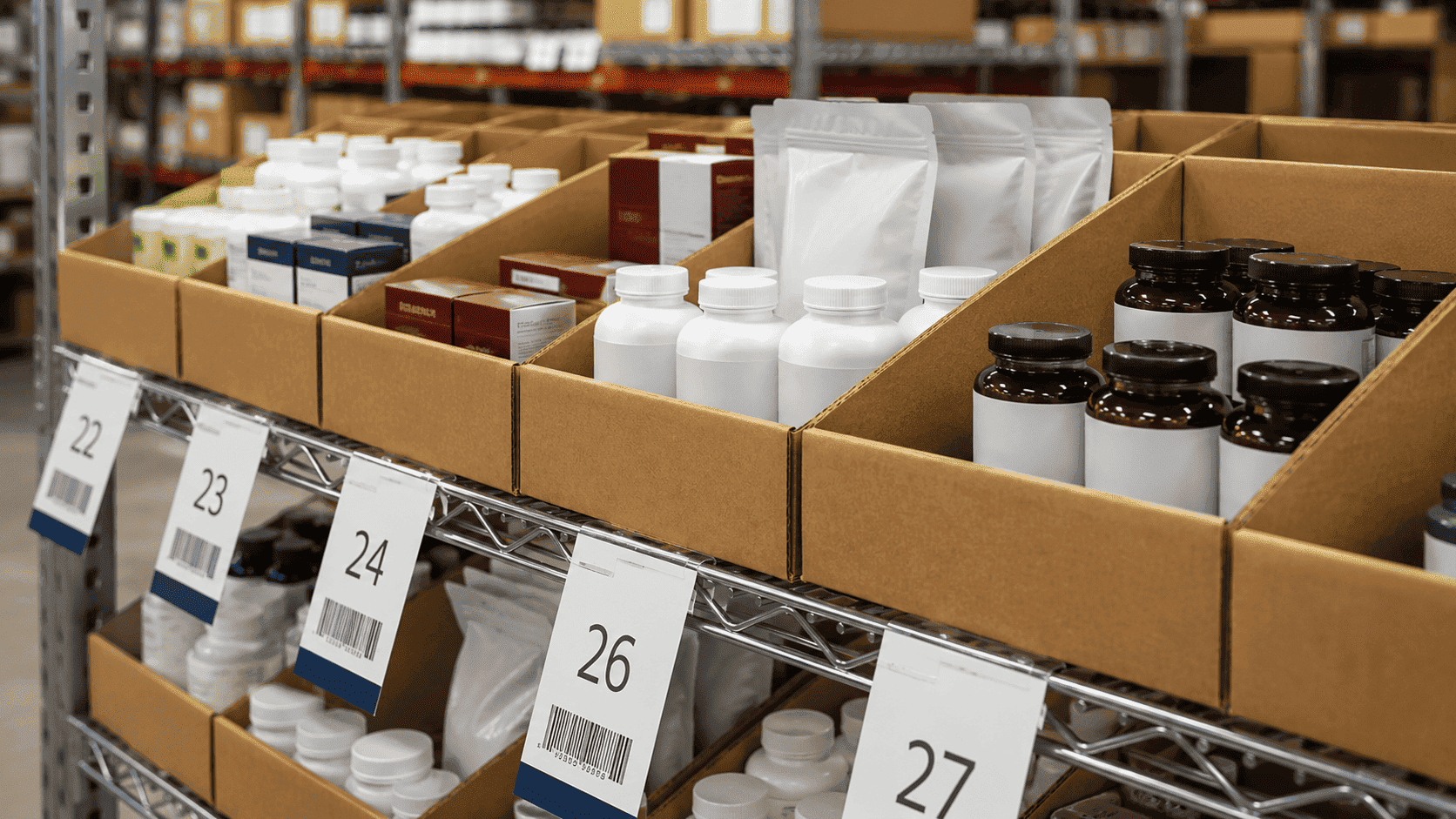
- Lot tracking and FIFO. Supplements carry best-by dates, so shipping the oldest stock first and tracing lots are compliance requirements.
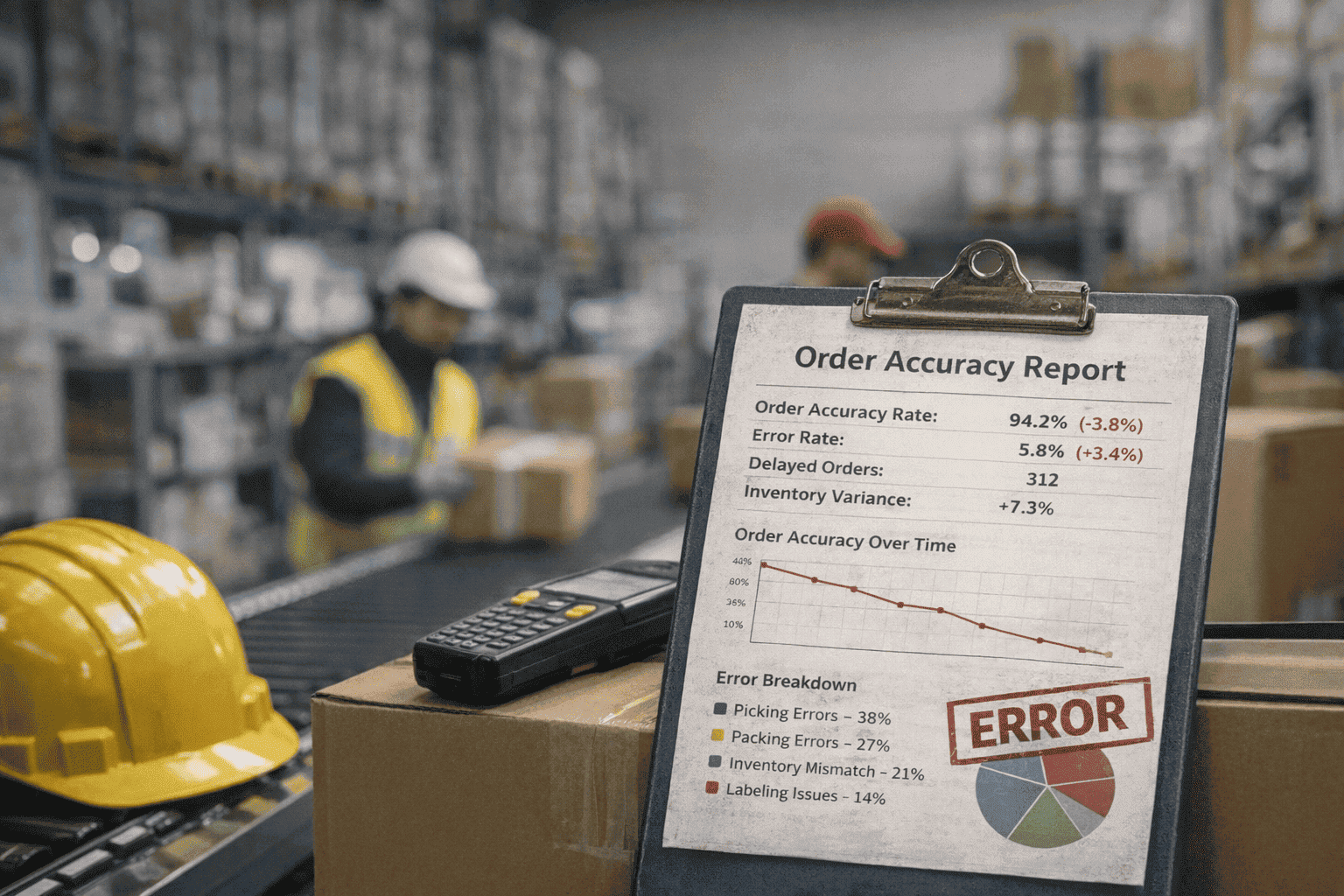
- Pick-and-pack accuracy. A wrong SKU in a supplement box is a safety issue, not just a refund.
- Channel coverage. Selling on your own store, Amazon, and TikTok Shop means different labeling, prep, and routing rules. A partner that supports those platforms keeps them from becoming separate operations.
- Reorder cadence. With a one-month bottle, subscription revenue is predictable, but only if fulfillment ships reliably enough to keep customers subscribed.
There is a boundary worth naming. Centralized, single-location fulfillment is built for subscription and repeat-order brands whose customers reorder days before running out. It is not built for brands doing five to ten thousand orders a day that need multi-node, coast-to-coast distribution.
Scaling that operation is harder than most founders expect. Whether to run a growing operation in-house or outsource it is a significant decision most founders need to make. When it’s time to outsource, choosing a 3PL is the next challenge you’ll be facing.
Questions worth asking any fulfillment partner before you commit
- Do they lot-track and ship FIFO by best-by date for regulated products?
- What is the real cost per order, including receiving, storage, and returns; not just the headline pick fee?
- Which sales channels do they prep for, and who owns Amazon FNSKU stickering and carton forwarding?
- What happens when something breaks, and who owns the fix?
Founders who seek to work with a dietary supplement fulfillment operation built for the category tend to ask these upfront. The ones who don’t usually learn the answers the hard way.
Turn a Business Plan Into a Brand That Ships
Starting a supplement company is really two projects:
- Building a product,
- Building the operation that sells and ships the product.
The business plan proves the margins. Fulfillment decides whether those margins survive growth.
The founders who treat selling and shipping as a system from day one, they face no business survival problems after the first stockout. Let’s put real numbers behind the plan.
CTA: Request a Quote
How to Start a Supplement Company FAQs
How much does it cost to start a supplement company?
Most lean launches run between $9,000 and $32,000, covering formulation, a first inventory run, legal setup, branding, and initial marketing. A working capital buffer of $20,000 to $50,000 for the first six months is prudent.
How do you start a supplement line with limited capital?
Start with one or two SKUs, not forty. Private-label formulas lower upfront cost and minimum order quantities, letting you validate demand before committing to custom formulation and larger production runs.
Is a supplement business profitable in the first year?
It can be, but rarely on first orders alone. Gross margins of 70-80% are common, yet acquisition costs often consume the first sale. Profitability usually arrives with repeat and subscription orders.
How long does it take to launch a supplement brand?
Private-label products can reach market in weeks, while custom formulations typically take three to twelve months. Fast, integrated operators have taken brands from idea to launch in around eight weeks.
What is the minimum order quantity for supplements?
A realistic first production run is around 5,000 units per SKU, though 2,500-unit runs are workable. Planning for only 300 to 500 units usually signals a business plan that has not been stress-tested.Yes. Most handle FNSKU stickering, poly-bagging, carton forwarding, and prep-to-spec so inventory routes straight into FBA, and often at roughly half of Amazon’s per-unit stickering fee, a meaningful saving at higher volume.
Get Started
Use our Fulfillment Fees Calculator to evaluate your current fulfillment structure and identify operational gaps that may impact retail and wholesale growth.
If you’re evaluating B2B fulfillment partners, request a quote to see how your operation can be structured to support retailer compliance, inventory visibility, and scalable fulfillment execution.
Recent Posts