Fulfillment Insights for
Supplement, Beauty & Wellness Brands
Operational Strategies and 3PL Expertise for Modern Health and Wellness Brands Scaling DTC, Retail, and Wholesale Operations
Key Takeaways
- FEFO (first expired, first out) is an inventory rotation method that picks and ships the units with the earliest expiration or best-by date first, regardless of when they arrived at the warehouse.
- FIFO ships the oldest received stock first, which can leave a newer lot with less shelf life aging on the shelf, while FEFO lets the date on the product decide what ships next.
- Running FEFO well depends on capturing a lot number and best-by date at receiving, flagging short-dated stock early, and dating kits by their shortest-dated component.
If you sell supplements, skincare, or any other product with a date on the label, the order in which inventory leaves the warehouse matters. Ship the wrong lot first and stock can expire on the shelf or reach customers with too little shelf life left. FEFO is the rotation rule built to prevent that. Here is what it means, how it compares with FIFO, and how to manage dated inventory around it.
What Does FEFO Mean?
FEFO stands for first expired, first out. It is an inventory management method where the units with the earliest expiration or best-by date are picked and shipped first, regardless of when they arrived at the warehouse.
What changes is the information that drives the warehouse. Under FEFO, the date printed on the product decides the order of picks, not the date the shipment was received. Every lot carries a date, and the system always reaches for the lot that will run out of shelf life soonest, even if it came in last week.
How FEFO Works in a Fulfillment Warehouse
FEFO only works if dates are captured correctly from the start. A typical flow looks like this:
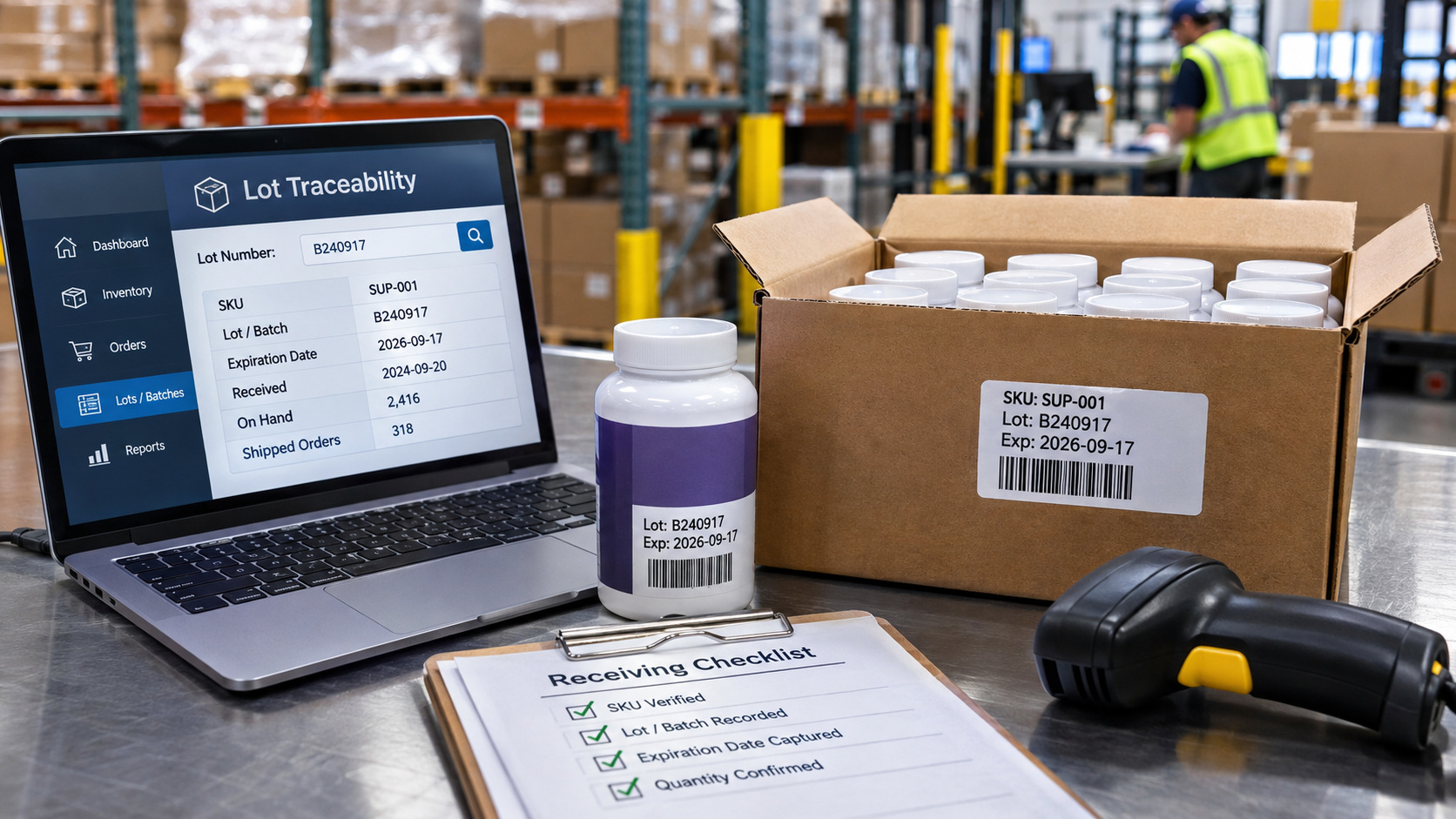
- Receiving. Each inbound shipment is logged by lot number and best-by or expiration date, read from the product itself. The receiving date says nothing about remaining shelf life, because inventory can arrive with a large share of its life already used up in production, transit, or a previous warehouse.
- Storage. Lots are stored and labeled so each SKU’s dates are visible in the system, and pickers aren’t left choosing between lots that look identical.
- Picking. The warehouse management system directs pickers to the lot with the nearest date. Stock on hold, under inspection, or reserved for a specific channel is left out.
- Kits and bundles. A kit is only as fresh as its shortest-dated component. For kits and subscription boxes, the earliest date across the components effectively becomes the kit’s date.
- Review. Dates are checked against stock on hand regularly, so lots approaching their limit get flagged before they become a problem.
FEFO vs FIFO: What’s the Difference?
FIFO, or first in, first out, ships the oldest received stock first. FEFO ships the stock that expires first. Most of the time, FIFO and FEFO give the same result, because the lot that arrived first usually carries the earlier date. They split when a newer shipment has less shelf life than the stock already on the shelf.
Here’s an example. A supplement brand holds a lot of capsules with 20 months of shelf life left. A new lot arrives, but it spent time in transit and storage before reaching the warehouse and has 9 months left. FIFO ships the older 20-month lot first and leaves the 9-month lot to age on the shelf. FEFO ships the 9-month lot first, so both lots sell through with usable life remaining.
| Factor | FEFO (First Expired, First Out) | FIFO (First In, First Out) |
|---|---|---|
| Sorts by | Earliest expiration or best-by date | Earliest receiving date |
| Data needed | Lot number and date for every lot | Receiving dates |
| Best fit | Supplements, skincare, food and beverage, other dated CPG | Undated goods such as apparel or accessories |
| Main risk it prevents | Product expiring in storage or shipping short-dated | Old stock sitting unsold |
There is also LIFO, or last in, first out, which ships the newest stock first. It is mostly an accounting concept and a poor fit for dated products.
How to Manage Expiration-Dated Inventory With FEFO
FEFO sits at the core of expiration date management, but it works best with a few habits around it:
- Set a minimum shelf life on receipt. Agree with your supplier or manufacturer on how much shelf life inventory must have when it arrives, so you aren’t starting with short-dated inventory.
- Define what short-dated means for your brand. Decide the threshold at which a lot gets flagged and what happens next: a promotion, a bundle, a different channel, or a write-off.
- Know your channel rules. Marketplaces and retailers can set their own requirements for expiration-dated products. On Amazon, dates and labeling need to be right before inventory goes in, which is part of FBA prep.
- Keep lot data recall-ready. When every order is tied to a lot and date, a supplier issue or recall means pulling a list of affected orders, not digging through paperwork.
- Avoid splitting dated inventory. Every extra warehouse holding the same SKU is another place where a lot can age out while another location runs short. One inventory pool makes rotation easier to enforce.
- Audit regularly. Spot-check dates against system records so FEFO in the system matches FEFO on the shelf.
Which Products Need FEFO?
FEFO fits any product where remaining shelf life decides whether it can be sold or used. That includes dietary supplements such as capsules, gummies, powders, and liquids, beauty and skincare products like serums, creams, and oils, shelf-stable food and beverage, and pet products such as treats and supplements.
FEFO is a rotation method, not a storage solution. It protects shelf life in an ambient warehouse, but it doesn’t replace cold-chain handling for refrigerated or highly perishable products.
How NDN Handles Lot and Best-By Rotation
At NDN Fulfillment, every inbound shipment is logged by lot number and best-by date at receiving, and that data follows the product through every outbound order. You choose how your stock rotates: by best-by date, which is FEFO, or by lot number when you need a specific lot sequence. We fulfill from one centralized facility in Oklahoma City, so your dated inventory sits in a single pool. The same date discipline carries into our kitting and subscription box fulfillment, so bundled orders don’t ship with a short-dated component hidden inside.
We’re built for shelf-stable CPG brands whose products arrive with a year or more of remaining shelf life, and every order ships by the next business day. Request a quote to see how we’d handle your SKUs.
What Is FEFO FAQs
What does FEFO stand for?
FEFO stands for first expired, first out. It is an inventory rotation method where the units with the earliest expiration or best-by date ship first, no matter when they were received. It is common for supplements, skincare, food and beverage, and other products with a limited shelf life.
Is FEFO better than FIFO?
For products with a date on the label, usually yes. FIFO assumes the oldest stock expires first, which isn’t true when a newer lot arrives with less shelf life. FEFO looks at the date itself, so short-dated lots move first. For undated products, FIFO works fine and needs less data to run.
Can a warehouse use FEFO and FIFO at the same time?
Yes. Rotation rules are usually set per SKU or per brand, so a warehouse can apply FEFO to dated products and FIFO to undated ones. Many operations also use FIFO as a tiebreaker within FEFO, shipping the earlier receipt first when two lots carry the same expiration date.
What data do you need to run FEFO?
At minimum, a lot number and an expiration or best-by date for every lot, captured at receiving and stored in the warehouse management system. Without lot-level dates, the system can’t tell which units expire first, and rotation falls back to guesswork or receiving order.
Get Started
Use our Fulfillment Fees Calculator to evaluate your current fulfillment structure and identify operational gaps that may impact retail and wholesale growth.
If you’re evaluating B2B fulfillment partners, request a quote to see how your operation can be structured to support retailer compliance, inventory visibility, and scalable fulfillment execution.
Recent Posts