Fulfillment Insights for
Supplement, Beauty & Wellness Brands
Operational Strategies and 3PL Expertise for Modern Health and Wellness Brands Scaling DTC, Retail, and Wholesale Operations
Key Takeaways
- Lot traceability is the ability to follow a group of units sharing one lot number from receiving to the customers who received them, and it depends on recording the lot at every warehouse handoff.
- Inside a 3PL, lot tracking means recording the lot number and best-by date at receiving, storing each lot separately, picking by the brand’s allocation rules, and saving the shipped lot on every order.
- Forward and backward traceability turn a recall into a targeted pull, so a brand can hold only the affected lot and contact only the customers who received units from it.
When a manufacturer flags a bad batch or a customer reports a problem with a product, the first question is always the same: which units are affected, and where did they go? Lot traceability is what lets you answer it with a list instead of a guess. For CPG brands that outsource fulfillment, most of that work happens inside the 3PL’s warehouse, so it pays to understand how lot and batch tracking actually work once your inventory arrives at the dock.
What Lot Traceability, Lot Tracking & Lot Control Mean
Lot traceability is the ability to follow a specific group of units, identified by a shared lot number, from the moment it is received to the customers who end up with it. Lot tracking, often called lot number tracking, is the day-to-day work that makes this possible: recording the lot number at every step so the trail has no gaps. Lot control is the inventory rule behind both, the setting that says a SKU must be received, stored and shipped by lot rather than as one pooled quantity.
Batch tracking and batch traceability describe the same practice. Some industries say batch, others say lot, and many inventory systems treat the two as synonyms. What matters for your brand is the result: a warehouse that tracks lots can tell you exactly which orders contain units from any given lot.
Lot Number vs Batch Number vs Serial Number
A batch number usually identifies a single production run, meaning units made together from the same materials under the same conditions. A lot number identifies a group of units handled together for traceability. Often a lot and a batch are the same thing, but a lot can also combine several batches or be assigned when goods are received.
In practice, batch number tracking and lot number tracking record the same thing: the code printed on your label, whichever name your manufacturer uses for it. What matters is that the code on the unit matches the code on the inbound paperwork.
Serial numbers work differently. A serial number is unique to a single unit, which suits high-value electronics with warranties. Consumables like supplements, skincare and packaged foods are tracked by lot instead, because every unit in a lot shares the same history.
How Lot Tracking Works Inside a 3PL Warehouse
Lot tracking and traceability only work if the lot number is captured at every handoff. Here is how that chain runs in a fulfillment operation.
At receiving
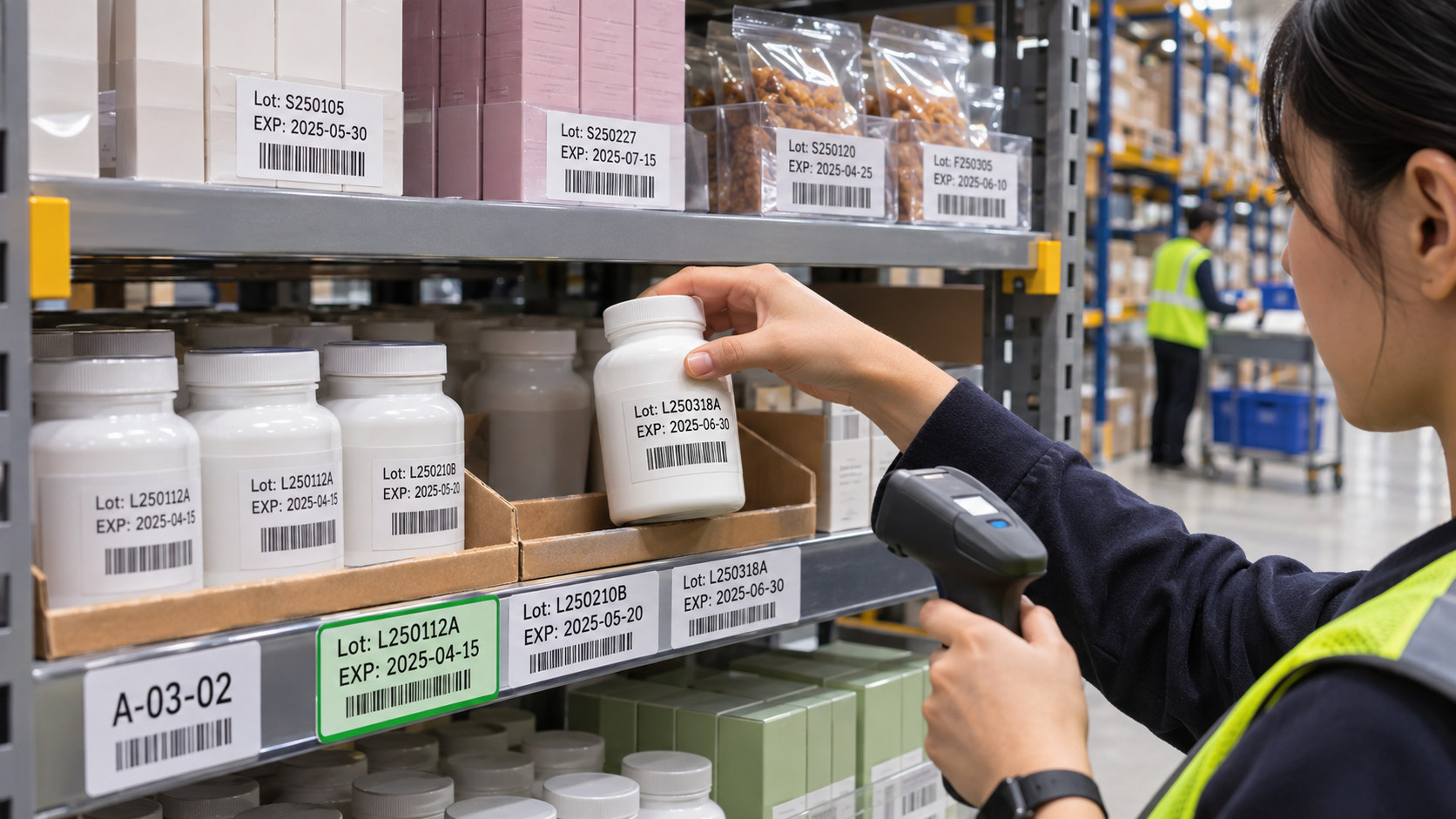
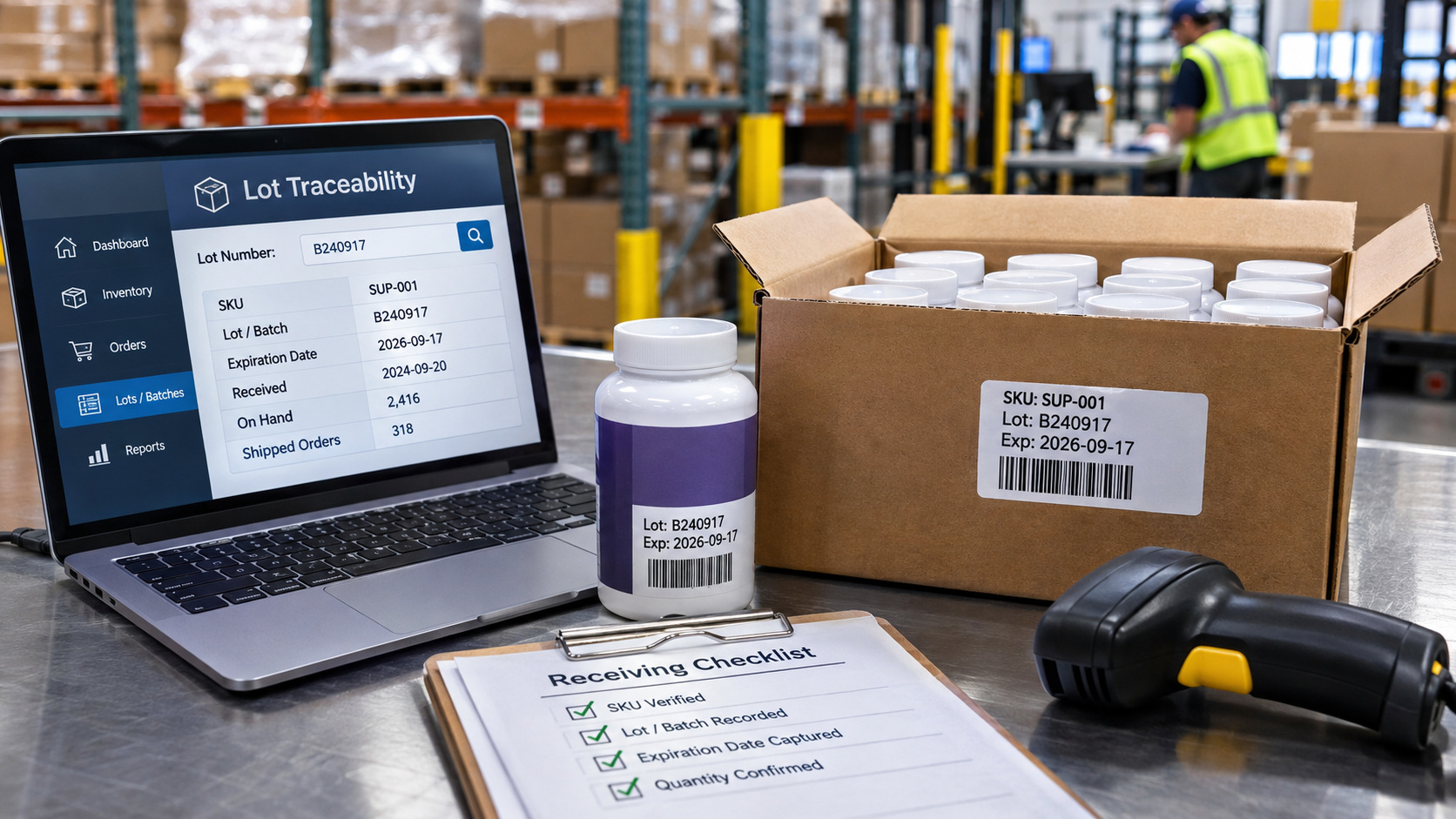
When an inbound shipment arrives, each SKU is checked in against its lot number and best-by date. This is the most important step, because a lot that isn’t recorded at the dock can’t be traced later. A single delivery can contain several lots of the same SKU, and each one is recorded separately.
In storage
Lots of the same SKU are kept as separate inventory records, so the warehouse always knows how many units of each lot are on hand and where they are. That separation is what makes stock rotation and lot-specific holds possible.
At picking and packing
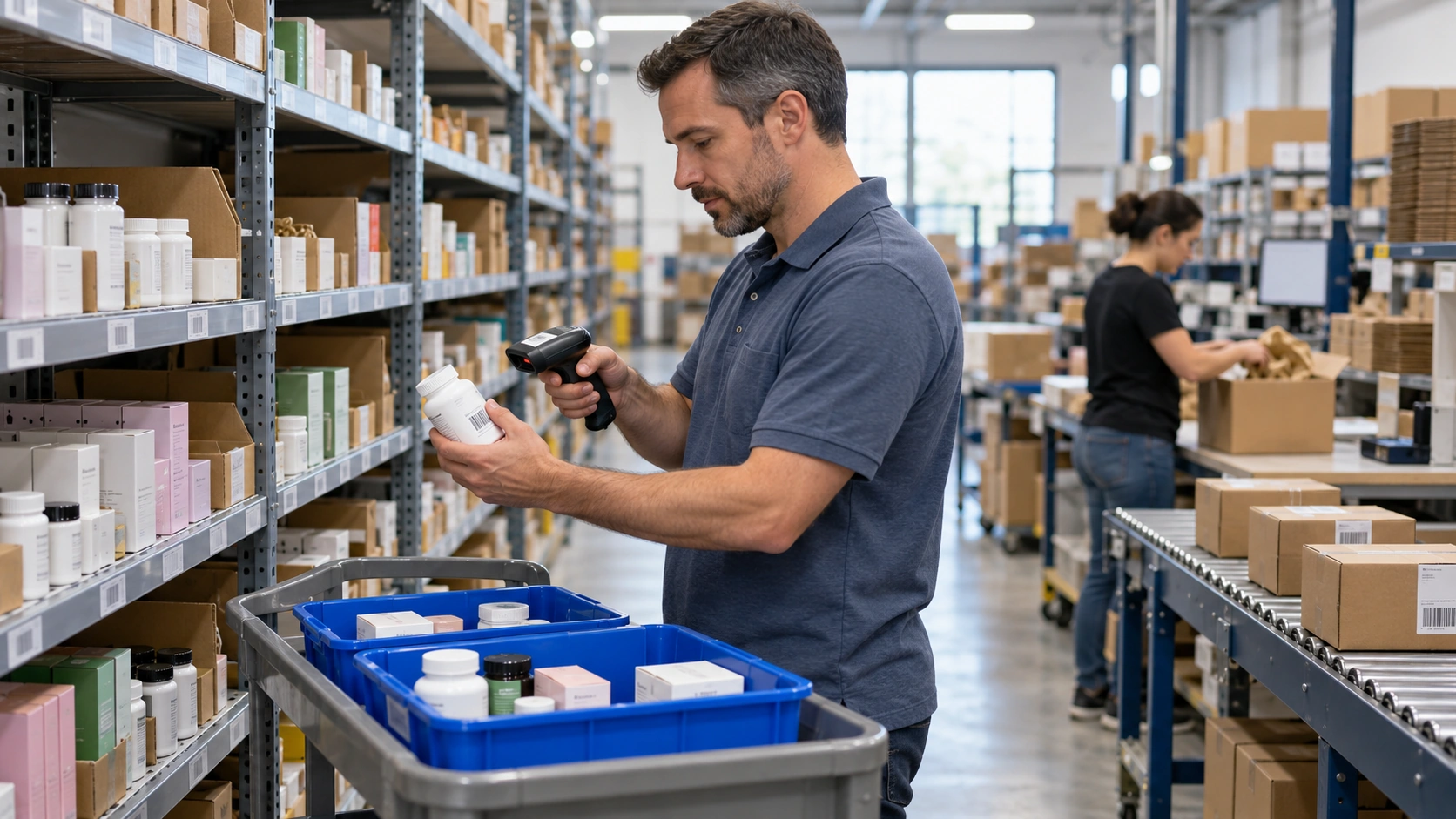
When an order comes in, the lot to pull is chosen by the brand’s rules, usually the oldest lot first or the nearest best-by date first (the logic behind FEFO). Pickers pull from that lot rather than from any unit of the right SKU.
On the order record
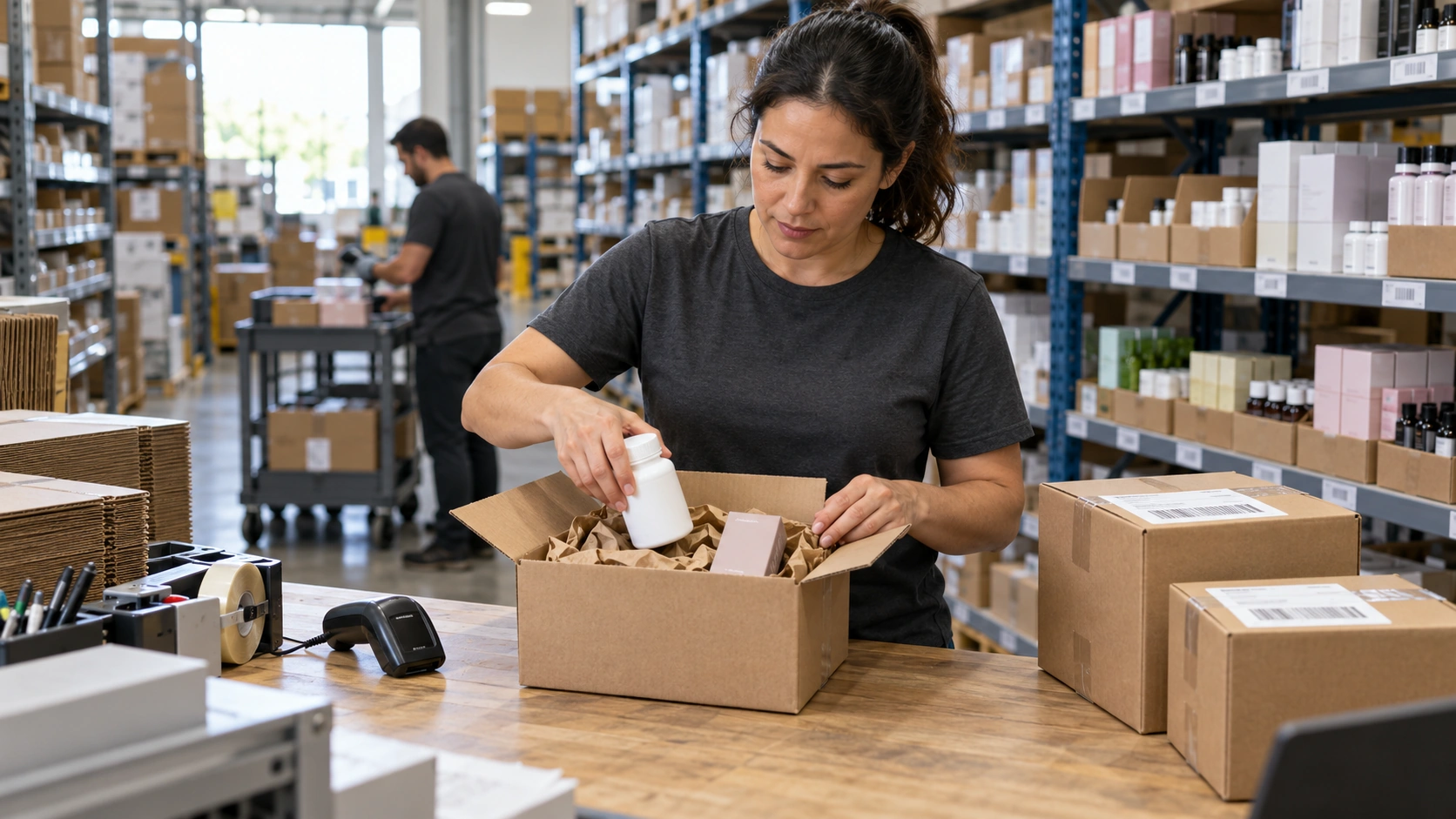
The lot that shipped is saved to the order itself. This step turns lot control into real traceability, because every outbound order now carries a record of which lot it contained.
Forward & Backward Traceability During a Recall
Traceability runs in two directions, and a recall usually needs both.
Backward traceability starts with a single unit and works back to its source. A customer reports a problem, you look up their order, and the order record shows which lot it came from and when that lot was received.
Forward traceability starts with a lot and works out to every customer. Your manufacturer flags a lot, and the warehouse pulls a list of every order that shipped units from it, plus how many units of that lot are still on the shelf.
With both, a recall becomes targeted. You hold the remaining stock of the affected lot, contact only the customers who received it, and keep shipping every other lot. Without lot-level records, the safe option is often to pull every unit of the SKU and notify every customer who ever bought it.
Benefits of Lot Tracking for CPG Brands
- Smaller, cheaper recalls. Only the affected lot is pulled, and only its customers are contacted.
- Fresher stock reaching customers. Allocating by lot or best-by date keeps older inventory from sitting behind newer stock until it can’t be sold.
- Faster answers. When a customer or retailer asks about a specific unit, the order record already shows the lot.
- Clearer supplier conversations. If one lot has a quality problem, you can show your manufacturer exactly which lot and how many units, instead of describing a general issue.
- More accurate counts. Counting by lot surfaces mismatches that a single pooled SKU count would hide.
How NDN Handles Lot and Batch Tracking
At NDN, FIFO and lot control are part of how we handle inventory. We record every inbound shipment by lot number and best-by date at receiving, and that data follows every order that leaves our building. You decide how your stock is allocated: we ship by lot number or by best-by date, whichever your brand prefers.
Because every order carries its lot data, we can identify affected orders quickly if a recall happens. And because all of your inventory sits in one centralized facility in Oklahoma City, there are no lots split across multiple warehouses to reconcile before you can act.
This matters most for supplement fulfillment and beauty and skincare fulfillment, two categories where brands most often need lot-level answers.
Lot Traceability FAQs
Which products need lot tracking?
Any product with a best-by or expiration date, and any product that could be recalled, benefits from lot tracking. For CPG brands, that includes supplements and nutraceuticals, beauty and skincare, and food and beverage products. As a rule, if units from one production run could differ in quality or shelf life from the next, track them by lot.
Can lot numbers be traced to individual customer orders?
Yes. Lot number traceability down to the order requires the lot to be recorded when each order ships. A warehouse that only tracks lots in storage can tell you which lots are on the shelf, but not which customers received them. Order-level lot records let you search by lot to get a list of affected orders, or search by order to see its lot.
What is lot control in inventory?
Lot control is an inventory setting that requires a SKU to be received, stored and shipped by lot instead of as one pooled quantity. Once a SKU is lot controlled, every unit belongs to a specific lot, and every inventory movement records which lot was involved.
What should a brand ask a 3PL about lot tracking?
Ask whether lot numbers and best-by dates are recorded at receiving, whether you can choose to ship by lot number or by best-by date, and whether the lot shipped is saved on each order. Ask how quickly they can produce a list of orders for a given lot. If you sell kits or bundles, also ask how lots are tracked for each component.
Get Started
Use our Fulfillment Fees Calculator to evaluate your current fulfillment structure and identify operational gaps that may impact retail and wholesale growth.
If you’re evaluating B2B fulfillment partners, request a quote to see how your operation can be structured to support retailer compliance, inventory visibility, and scalable fulfillment execution.
Recent Posts