Fulfillment Insights for
Supplement, Beauty & Wellness Brands
Operational Strategies and 3PL Expertise for Modern Health and Wellness Brands Scaling DTC, Retail, and Wholesale Operations
Every online order goes through the same routine inside a warehouse: someone finds the products, someone packs them, and a carrier takes the box away. That routine is called pick, pack, and ship, and it decides how fast orders leave, how often they arrive correctly, and how much each shipment costs. This article covers what it means, how each step works, the main picking methods, and how to keep errors down.
What Is Pick, Pack, and Ship?
Pick, pack, and ship is the warehouse process of pulling ordered items from storage (pick), preparing them in a protected, labeled package (pack), and handing that package to a carrier (ship). The terms pick and pack and pick and pack fulfillment describe the same workflow.
It sits at the center of order fulfillment but is not all of it. Fulfillment also covers receiving, storage, and returns, as our overview of what ecommerce fulfillment is explains. Pick, pack, and ship starts when an order is released to the warehouse floor and ends when the carrier scans the label.
How the Pick, Pack, and Ship Process Works
The process follows the same three steps whether a warehouse ships 50 orders a day or 5,000.
Step 1: Pick
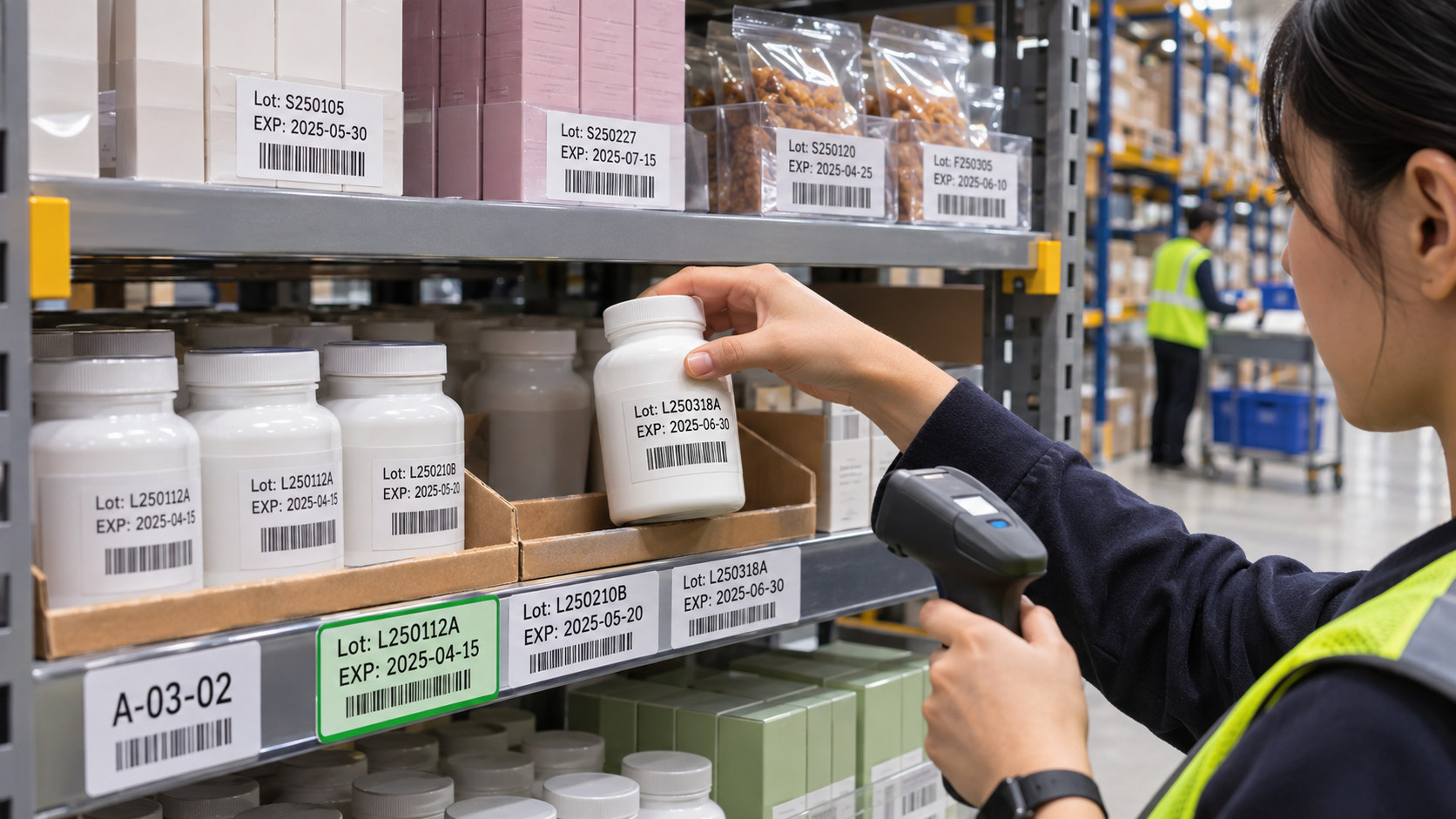
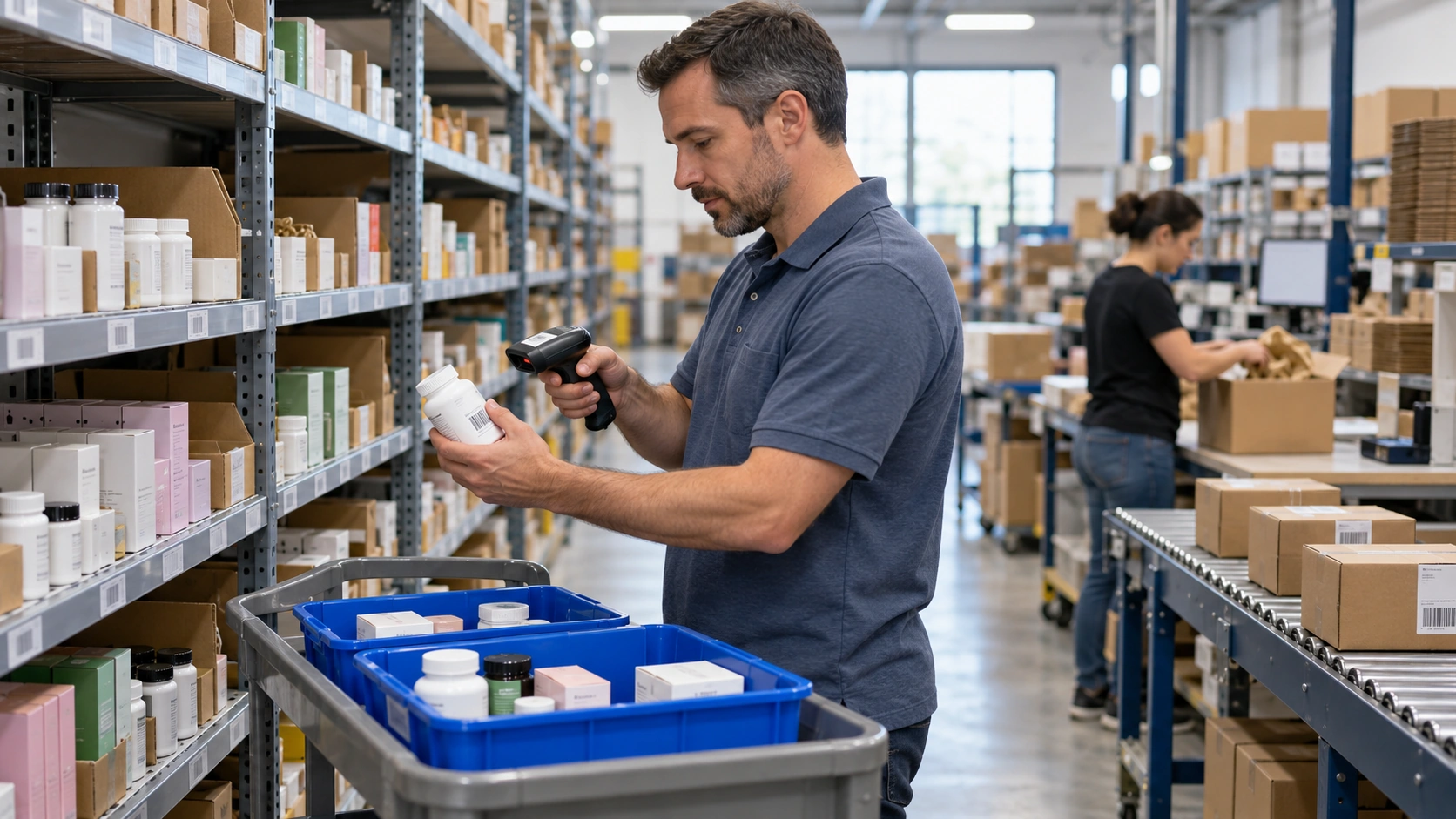
When an order reaches the warehouse management system (WMS), it becomes a pick list showing which items to collect, how many, and where each one is stored. A picker follows the route, pulls the items, and confirms each one, usually by scanning its barcode.
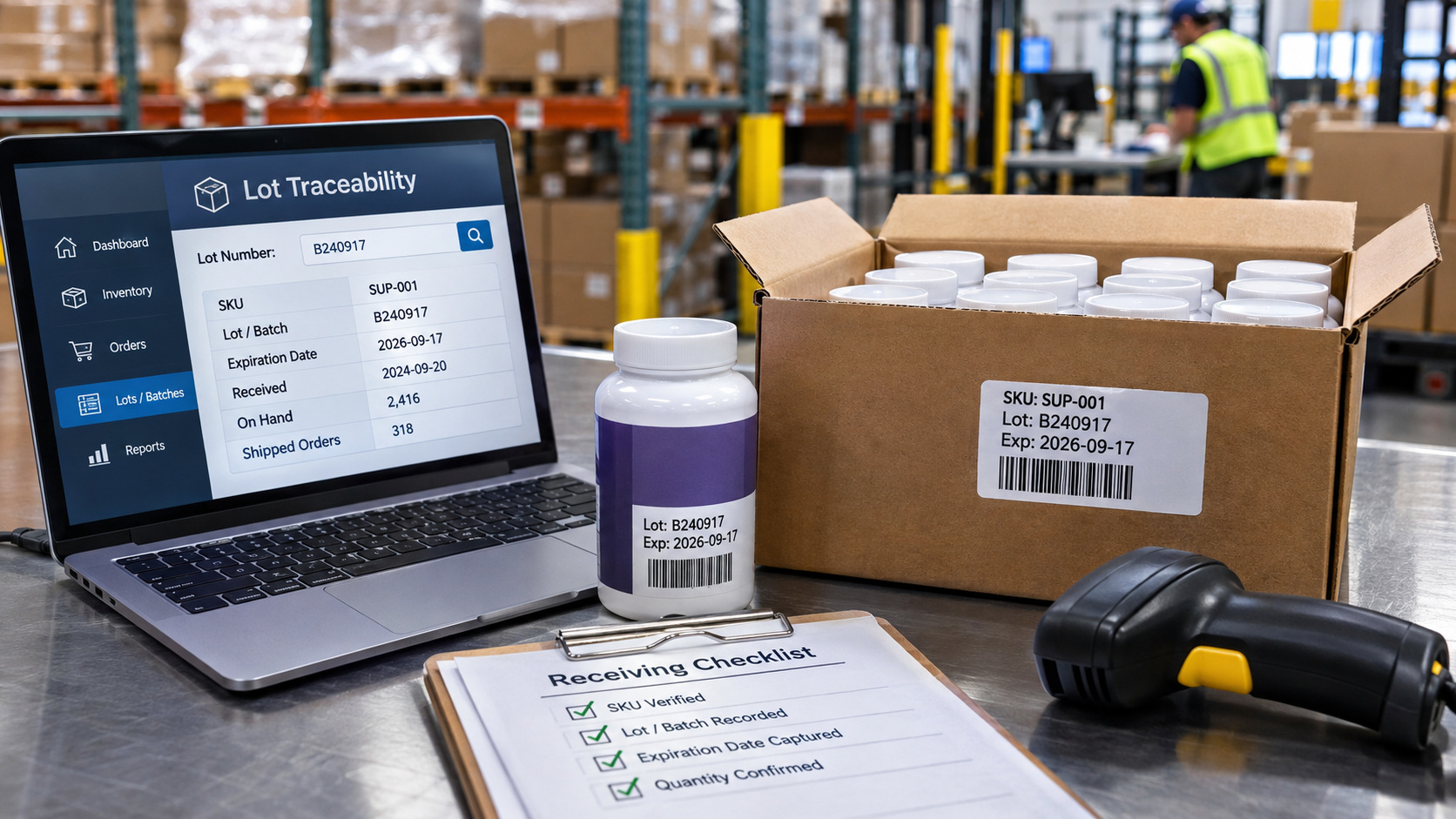
Picking is typically the most labor-intensive step, because most of the time goes into walking between locations. That is why warehouses place fast-moving SKUs near the packing area and choose a picking method that cuts travel. For products with lot numbers or best-by dates, this is also where the right unit has to be chosen, not just the right SKU.
Step 2: Pack
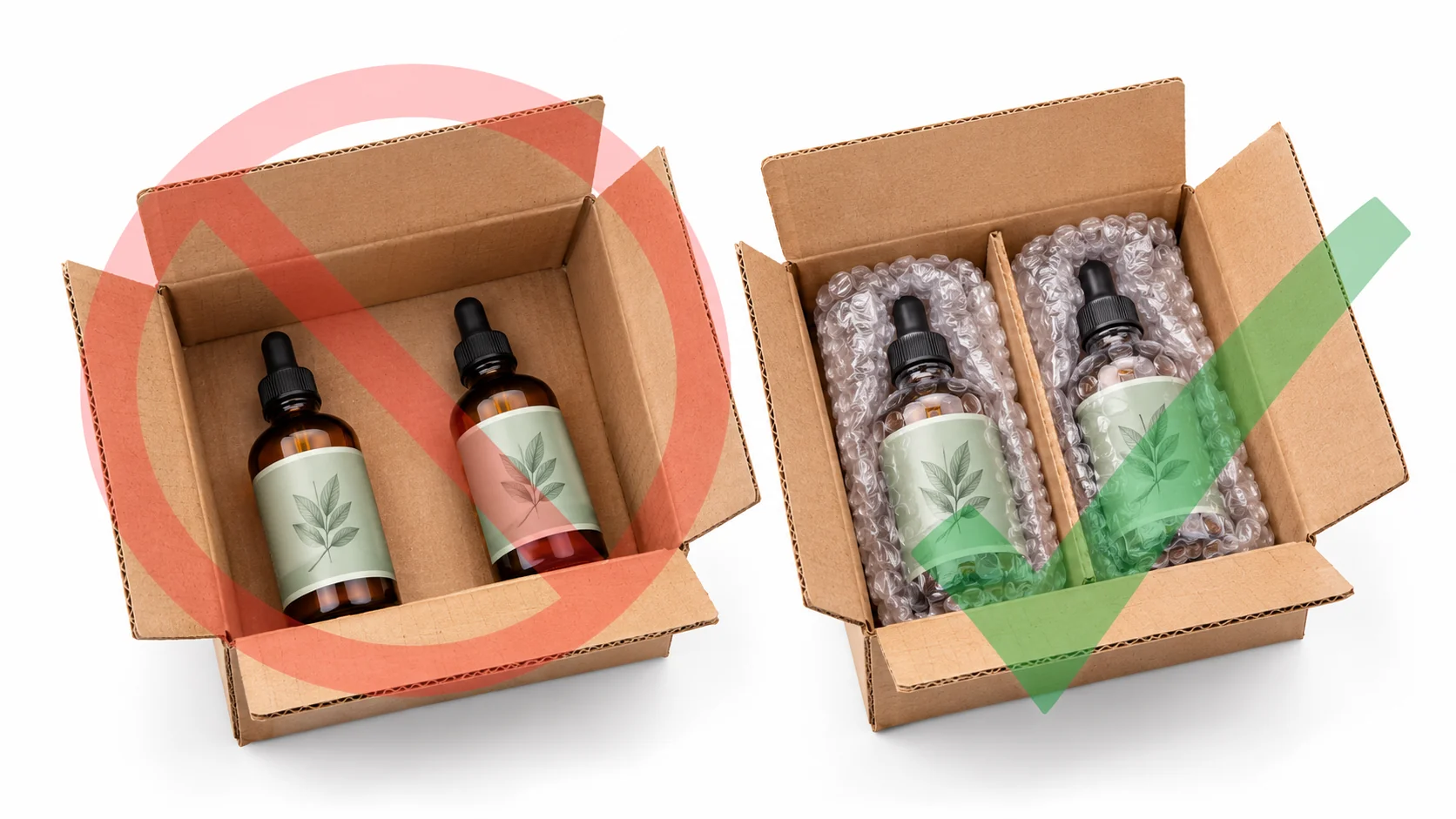
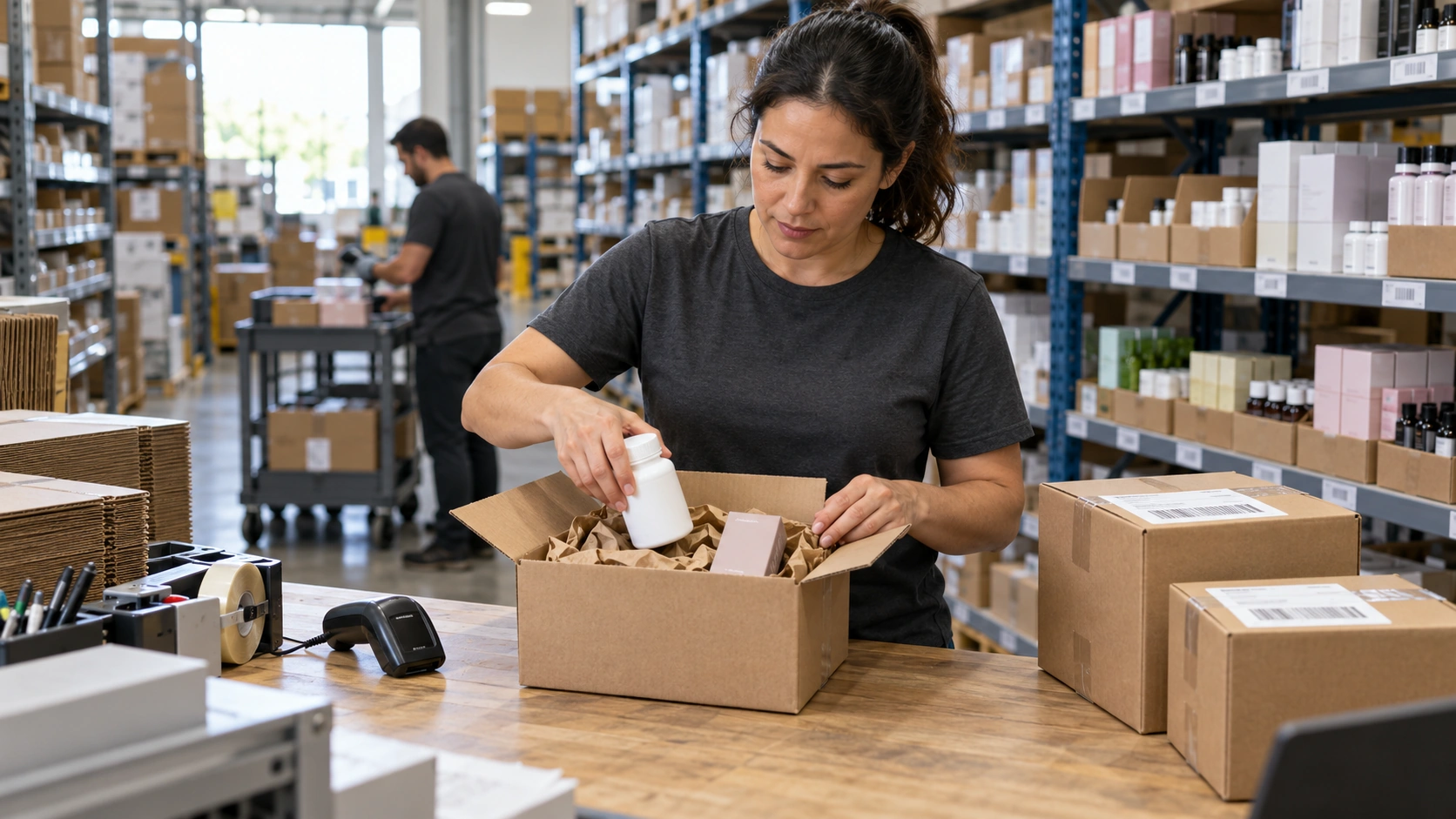
At the packing station, the packer checks the picked items against the order before anything goes in the box. Then they choose a carton or mailer sized to the order, with enough dunnage (paper, air pillows, or other fill) to stop products shifting in transit. Right-sizing matters because carriers price many parcels by dimensional weight, so an oversized box costs more to ship.
Packing is also where value-added work happens: inserts such as thank-you cards or samples, bundles built through kitting and assembly, and box mapping, where products are placed in a set layout so every customer gets the same unboxing experience. Finally, the packing slip goes in and the box is sealed and labeled.
Step 3: Ship
Packed orders are sorted by carrier, staged, and handed off for pickup. Once the label is scanned, the tracking number flows back to the sales channel so the customer can follow the delivery. That handoff depends on the warehouse system being connected to every store and marketplace the brand sells on, which is why platform integrations matter as much as speed on the floor.
Common Picking Methods
How orders are grouped for picking shapes speed more than almost anything else. These are the four most common methods.
Piece Picking
One picker fills one order at a time, start to finish. It is simple and accurate, but travel time adds up quickly as volume grows.
Batch Picking
One picker collects items for several orders in a single trip, then sorts them by order. It works best when many orders share the same SKUs.
Zone Picking
The warehouse is split into zones, and each picker works only their own. Orders pass from zone to zone until complete, which suits large facilities with wide SKU ranges.
Wave Picking
Orders are released in scheduled groups based on carrier pickup times, priority, or SKU overlap. Each wave can be sequenced so pickers cover the floor once, which suits operations shipping many small orders a day.
Benefits of an Efficient Pick, Pack, and Ship Process
When the three steps run smoothly, the gains add up:
- Faster fulfillment: orders leave the building sooner, which shortens delivery times and supports repeat purchases.
- Fewer errors and returns: verified picks and pack-out checks mean fewer wrong items, reshipments, and support tickets.
- Lower shipping costs: right-sized packaging cuts dimensional weight charges on every parcel.
- Tighter inventory control: every pick is recorded, so stock counts stay accurate and stockouts are easier to see coming.
- Room to scale: a documented, sequenced process can absorb seasonal peaks and promotions without falling behind.
Common Pick and Pack Errors and How to Reduce Them
Most fulfillment problems trace back to a handful of errors:
- Mis-picks: the wrong SKU, size, or flavor is pulled, often because similar products sit side by side.
- Wrong quantities: a multi-unit order ships short or over.
- Missing inserts or kit components: the order is right but incomplete.
- Transit damage: the box is the wrong size or underfilled.
- Wrong lot or short-dated stock: an older or nearly expired unit ships while fresher stock waits on the shelf.
To reduce picking and packing errors, scan every item at pick and again at pack, store look-alike products apart, write packing standards for each SKU and kit, and verify every order against its pick list before the carton is sealed. Tracking errors by type shows where the process needs tightening.
Pick, Pack, and Ship for Supplements and Other Consumables
Consumables add a layer to each step. At pick, the right unit comes from the correct lot, rotated first in, first out (FIFO) or by best-by date so customers still receive plenty of shelf life. At pack, small parcels often carry bundles or inserts that must match the brand’s specification exactly. At ship, speed matters because subscription customers reorder shortly before they run out.
NDN Fulfillment’s pick and pack services are built for these orders: wave picking and pick-pack sequencing for small-parcel CPG orders, lot control, and shipping by lot number or best-by date. Kitting, inserts, and box mapping are handled in-house, and orders ship by the next business day from an FDA-registered facility in Oklahoma City, which reaches most US customers in about two business days. The same standard applies across supplement fulfillment, beauty, and wellness orders.
Pick, Pack, and Ship FAQs
What is the difference between pick and pack and order fulfillment?
Pick and pack covers the warehouse steps that turn an order into a packed, labeled parcel. Order fulfillment is broader: it includes receiving and storing inventory, picking, packing, shipping, and returns. Pick and pack is the part customers notice most, because it decides whether the right products arrive on time.
How long does pick, pack, and ship take?
Picking and packing a standard order takes far less time than the wait before it, so the real measure is how quickly orders are released to the floor. Most 3PLs commit to shipping within one business day. At NDN, every order ships by the next business day, and its Oklahoma City location keeps ground transit to about two business days for most of the US.
When should a brand outsource pick and pack?
Outsourcing usually makes sense when order volume outgrows your space or staff, when packing errors start costing customers, or when the team spends more time shipping than selling. A 3PL brings trained staff and proven processes without the cost of running a warehouse. Here are the signs it’s time to outsource fulfillment.
Get Started
Use our Fulfillment Fees Calculator to evaluate your current fulfillment structure and identify operational gaps that may impact retail and wholesale growth.
If you’re evaluating B2B fulfillment partners, request a quote to see how your operation can be structured to support retailer compliance, inventory visibility, and scalable fulfillment execution.
Recent Posts