Fulfillment Insights for
Supplement, Beauty & Wellness Brands
Operational Strategies and 3PL Expertise for Modern Health and Wellness Brands Scaling DTC, Retail, and Wholesale Operations
Key Takeaways
- A 3PL quote is a stack of line items, not one number: receiving, storage, pick and pack, packaging, shipping, and account minimums.
- Four pricing models dominate: flat-rate, activity-based, cost-plus, and hybrid. Most modern 3PLs run some version of hybrid.
- SKU count matters, not just orders: more SKUs and more touches per order raise handling and storage.
- Shipping is the largest line for most brands, and carrier rates are broadly similar across providers.
- The cheapest quote rarely wins once minimums, surcharges, and specialization fit are counted.
Understanding 3PL fulfillment pricing starts with one uncomfortable truth: most quotes are built to look simple and bill in ways that aren’t. A fulfillment quote isn’t a single price. It’s a stack of separate charges, like receiving, storage, pick and pack, packaging, shipping, and monthly minimums, that each move independently as order volume and SKU count change. Understand the full fee stack, and you can compare providers on equal terms. Focus only on the headline rate, and the comparison quickly falls apart.
What Goes Into a 3PL Quote
The numbers vary, but every quote comes down to the same essential components. The labels differ by provider. The categories rarely do.
Average 3PL Costs And Billing
| Cost component | How it is usually billed | Typical industry range |
|---|---|---|
| Receiving / inbound | Per pallet, carton, or hour | ~$5-$15 per pallet |
| Storage | Per pallet, bin, or cubic foot, monthly | ~$15-$40 per pallet/month |
| Pick and pack | Base fee per order + per extra item | ~$2-$3 first item; ~$0.30-$0.75 each add'l |
| Packaging | Per order; standard vs. custom | Standard often bundled; custom billed separately |
| Shipping | Carrier rate + zone + dimensional weight | Largest single line for most brands |
| Account minimum / setup | Monthly minimum + one-time onboarding | ~$250-$1,000 setup; minimums vary |
How to Read the Cost Breakdown
The ranges above are illustrative industry benchmarks, not rates from any single provider. Your actual costs will depend on your products, inventory levels, order profile, and contract terms.
Receiving covers the work required to unload, count, inspect, and shelve inbound inventory. Providers may charge by the pallet, carton, or labor hour.
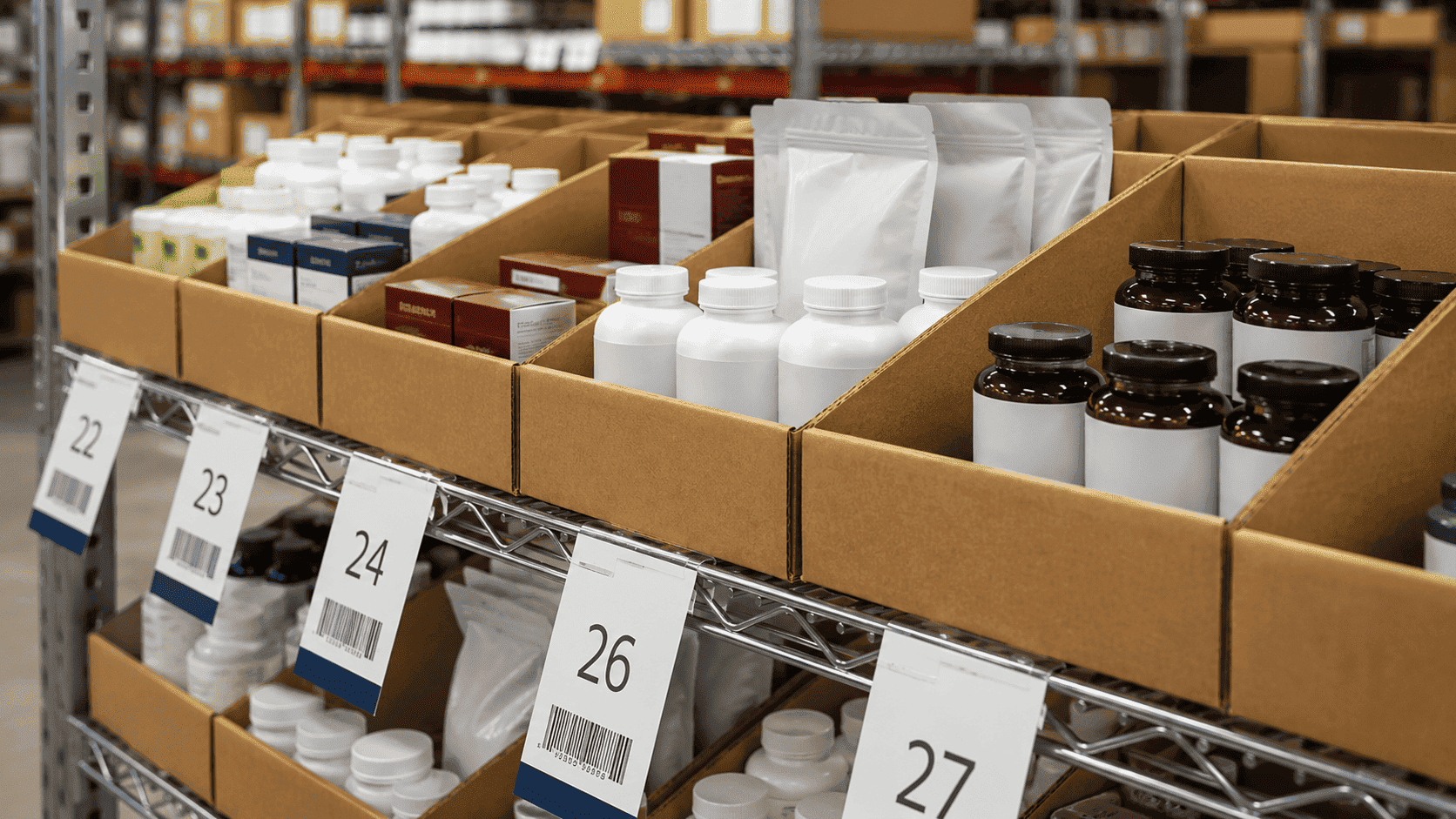
Storage is based on the space your inventory occupies, typically per pallet, bin, or cubic foot. Deep inventory and slow-moving SKUs generally cost more to hold over time.
Pick and pack rates usually include a base charge for the first item, followed by a smaller fee for each additional item. Because this cost applies to every order, even small differences can add up quickly.
Packaging may be included in the pick fee or billed separately. Custom boxes, inserts, and value-added services such as kitting are commonly priced per unit or labor hour.
Shipping is often the largest and most underestimated expense. Carrier charges depend on package weight, shipping zone, service level, and dimensional weight. Courier annual rate increases can push costs higher.
Setup fees and account minimums vary widely. Some providers charge for onboarding or require a minimum monthly spend, so confirm these terms before comparing quotes.
The Main 3PL Pricing Models
Most providers use one of four 3PL pricing models.
- Flat-rate bundles services into one recurring price. Predictable, but it can overcharge quiet months.
- Activity-based bills each action separately. It’s the most common structure for ecommerce order fulfillment pricing, and the easiest to audit line by line.
- Cost-plus passes through the 3PL’s direct costs with a markup, usually around 15%.
- Hybrid mixes flat and activity-based elements, where most modern 3PL order fulfillment pricing models now sit.
The model matters less than its transparency. A clear activity-based quote beats a flat rate that hides what you are actually paying for.
How 3PL Fulfillment Pricing Scales With Volume and SKU Count
Order count is the obvious driver. It isn’t the only one.
Two brands shipping the same number of orders can receive very different quotes. The difference usually comes down to SKU count and touches per order. More SKUs mean more storage locations and more complex picking. More units per order means more pick fees.
At lower volume, that difference is hidden. At scale, it gets exposed.
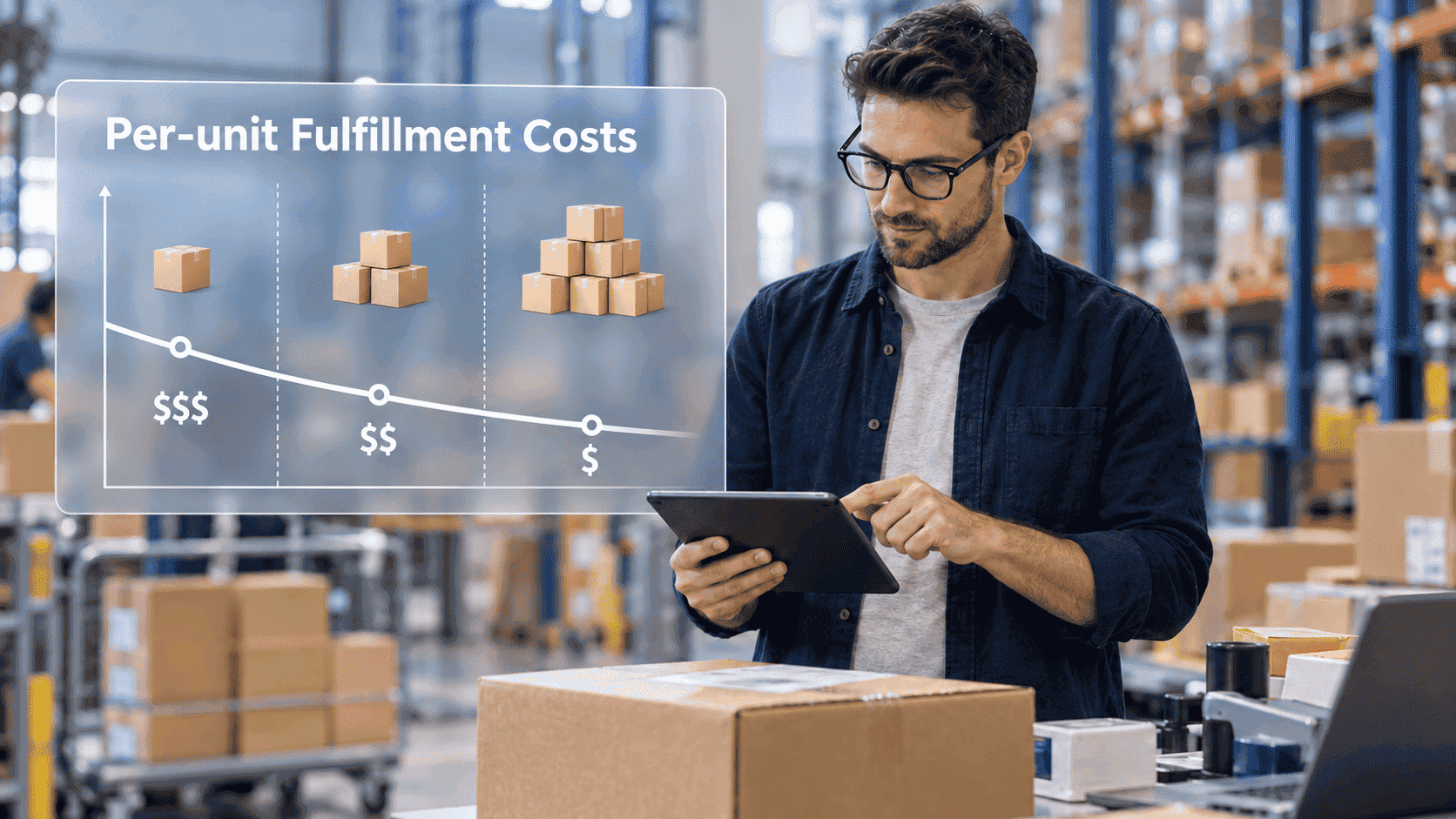
Volume also unlocks leverage. More orders give 3PLs greater buying power, which can translate into handling discounts and better shipping rates through economies of scale.
For a closer look at where scale strains an operation, see why scaling a 3PL becomes more complex than expected.
How to Estimate Your Fulfillment Costs
You don’t need a quote to model your costs. You need the inputs a quote is built from.
Any honest 3PL cost calculator, or a simple cost estimator, runs on the same variables:
- Monthly order volume, and how far it swings between peak and off-season.
- SKU count and units per order, which drive picking and storage.
- Average package weight and dimensions, which drive shipping.
- Storage footprint, in pallets, bins, or cubic feet.
- Value-added services, such as kitting, inserts, or FBA prep.
- Destination mix, since shipping zones decide a large share of the bill.
Feed those into any estimate, and you get a realistic range. Feed the same numbers to every provider, and you get a true 3PL price comparison; one built on identical assumptions instead of marketing math.
Questions worth asking before you sign a 3PL Contract
- What is the monthly minimum, and what triggers it?
- Which surcharges are not shown on the sample quote?
- How are storage overages and long-term storage billed?
- What is the standard fulfillment SLA, and what happens when it is missed?
- How is order accuracy measured, and who owns an error when it happens?
A quote that survives those questions is worth more than one that only wins on price. Brands that shop purely for the cheapest option, rather than accountability, are usually the ones migrating to a new 3PL again within a year.
➡️ For the full framework, read how to choose a 3PL for your scaling CPG brand.
A pricing guide can take you to the door, and if you have not settled the in-house-versus-outsourced question, that decision comes first. The real number comes from your own order profile run against a provider built for it. Map your inputs against a partner that specializes in your category, then pressure-test the quote with the questions above.
FAQs about 3PL rates and pricing
How much does a 3PL cost per order?
Most 3PLs charge a base pick fee of roughly $2 to $3 for the first item, plus $0.30 to $0.75 per additional item, before packaging and shipping. Total per-order cost depends on weight, zone, and SKU count.
How are 3PL storage rates calculated?
Storage is billed by the space inventory occupies, meaning per pallet, per bin, or per cubic foot, charged monthly. Cubic-foot pricing often suits high-SKU or partial-pallet inventory, while pallet pricing can penalize underused space.
What is a 3PL account minimum?
An account minimum is a monthly floor you pay regardless of activity, protecting the 3PL against low-volume accounts. If your actual charges fall below it, you are billed the difference.
Do 3PLs charge setup or onboarding fees?
Many do; commonly a one-time fee from the low hundreds up to around a thousand dollars, covering system integration, SKU creation, and platform connections. Some waive it in exchange for a contract commitment.
How do I compare 3PL quotes fairly?
Give every provider identical inputs: order volume, SKU count, weights, and destinations. Orders from a cosmetics brand shipping heavy glass will weigh more than from a supplement brand shipping light bottles, so the same rate card produces different totals.
Get Started
Use our Fulfillment Fees Calculator to evaluate your current fulfillment structure and identify operational gaps that may impact retail and wholesale growth.
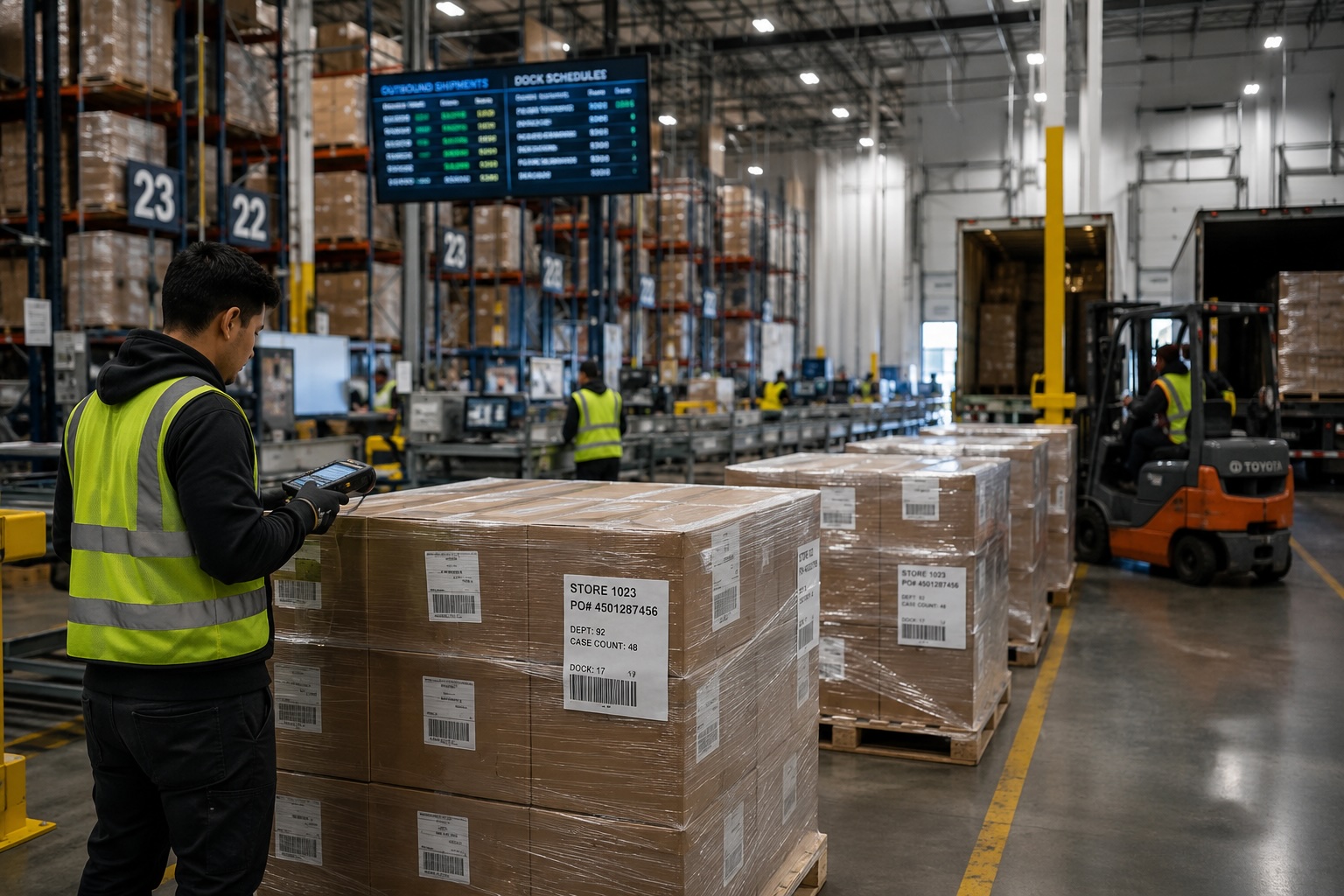
If you’re evaluating B2B fulfillment partners, request a quote to see how your operation can be structured to support retailer compliance, inventory visibility, and scalable fulfillment execution.
Recent Posts